Shining broadleaf
Griselinia lucida Forst. f.
Description
Shining broadleaf (Griselinia lucida) is a striking evergreen shrub belonging to the Griseliniaceae family. In its native habitat, it displays a versatile growth habit, often starting as an epiphyte in the forks of forest trees before descending its roots to the ground, though it thrives equally well when planted directly into the soil.
The species is native to New Zealand, where it is found in coastal regions and temperate forests. Its geographic distribution is strictly tied to maritime climates characterized by mild winters and high humidity. Outside its natural range, the plant requires protection from severe frosts, making it a popular choice for conservatory gardening or sheltered coastal landscapes.
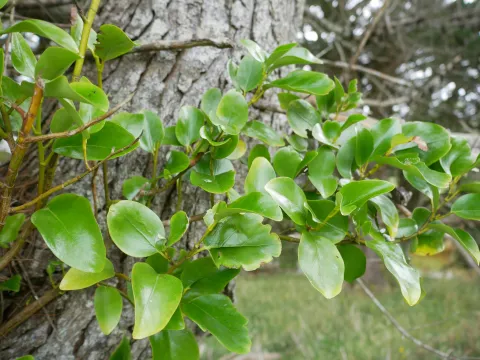
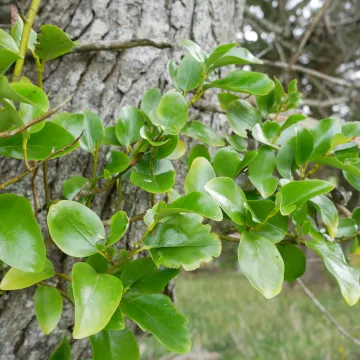
Botanically, the plant is distinguished by its thick, leathery, and intensely glossy leaves that have a characteristic asymmetrical base. The stems are robust, allowing the shrub to form a dense and evergreen structure. The flowers are small and dioecious, appearing in panicles, followed by small purple-black berries that are significant for local bird populations.
Regarding agrotechnical requirements, Griselinia lucida thrives in well-drained, fertile soil with a neutral to slightly acidic pH. While it tolerates partial shade, it performs best with moderate exposure to light. Regular moisture is essential for young plants, though established specimens exhibit reasonable drought tolerance once they are fully acclimated to their environment.
Economically, this culture is highly valued in horticulture for landscaping, particularly in regions prone to salt spray, where other plants fail. It is frequently used for dense hedging and privacy screens. Because of its glossy foliage and structural growth, it is a staple in ornamental gardens, either as a standalone specimen or as a reliable structural backdrop.
- Distinctive glossy and leathery foliage.
- Excellent salt tolerance for coastal landscapes.
- Suitability for container gardening in cooler climates.
- Dense growth habit ideal for windbreaks.
Common health issues in cultivation include root rot caused by poor drainage or excessive watering. Pests such as scale insects and mealybugs can occasionally infest the foliage, especially in greenhouse conditions. Proper cultural practices, including consistent pruning to improve airflow and timely pest scouting, are key to maintaining a healthy and vigorous plant.
Photo gallery