
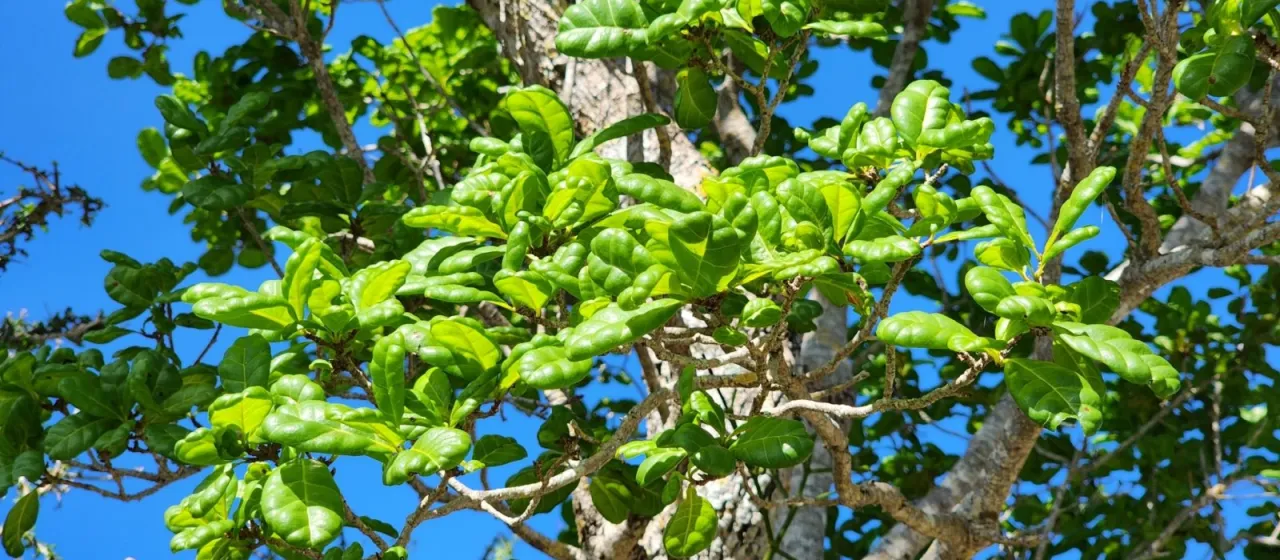
Description
Guettarda calyptrata is a notable tropical tree species belonging to the Rubiaceae family. This botanical family is globally recognized for its significant economic and ecological impact, and the genus Guettarda itself includes numerous species that are adapted to specific island ecosystems, contributing to local biodiversity.
The plant is native to the Caribbean region, with a primary distribution range across Cuba and surrounding territories. Within its natural habitat, it thrives in humid tropical forest environments where it acts as a key element of the mid-canopy layer, supporting complex interactions between flora and local fauna.
Botanically, Guettarda calyptrata is distinguished by its dense, woody structure and opposite, well-veined leaves. Its floral structure is adapted for specific pollinators, and the development of its fruit follows typical patterns observed in the Rubiaceae. These characteristics make it a subject of interest for both taxonomists and conservationists focusing on Caribbean biodiversity.
Regarding cultivation requirements, the species demands a climate characterized by constant warmth and high humidity levels. The ideal soil conditions involve well-drained, nutrient-rich substrates, often with a slightly acidic profile. Careful site selection is necessary to avoid waterlogging, which the plant is highly susceptible to in its early developmental stages.
The economic and practical usage of this species is primarily focused on reforestation projects and ornamental forestry within its native climatic zone. While it is not a large-scale agricultural crop, its value lies in soil stabilization and ecosystem restoration. Growers should be aware of potential fungal pathogens common in humid regions and implement standard pest management strategies to ensure healthy tree development.