Guiana chestnut
Pachira aquatica Aubl.
Description
The Guiana chestnut (Pachira aquatica Aubl.) is a tropical tree belonging to the Malvaceae family. Naturally occurring in the wetlands of Central and South America, it is widely recognized both for its edible seeds and its status as a popular ornamental plant, often marketed under names associated with good fortune and economic prosperity.
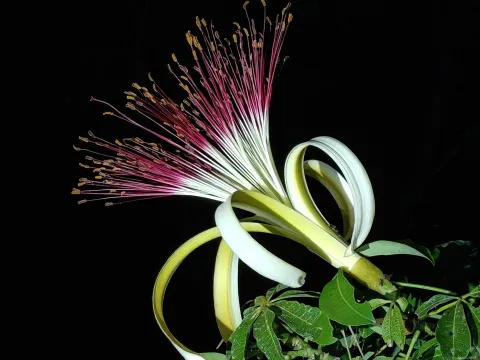
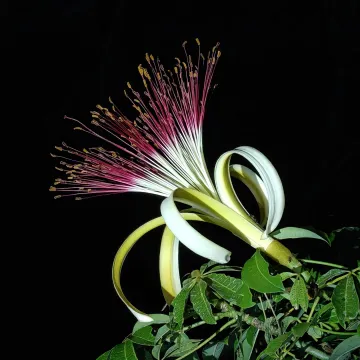
Botanically, the species is distinguished by its glossy, palmately compound leaves and large, striking flowers that feature numerous long, showy stamens. The plant produces large woody pods containing multiple seeds, which serve as a significant food source for local populations in its native range, where they are consumed after roasting or frying.
The cultivation of this crop requires a tropical or subtropical environment with high humidity and consistent temperatures. In agricultural settings, it demands well-draining soil that is rich in organic matter. While the species is adapted to swampy conditions, potted specimens require careful water management to prevent root rot, which is the most frequent cause of failure in domestic cultivation.
Effective agrotechnical practices for the Guiana chestnut include maintaining a consistent ambient temperature above 20°C and ensuring the plant receives bright, indirect sunlight. During the growing season, regular fertilization with a balanced NPK ratio is essential to support the rapid development of its characteristic foliage and stem structure.
Pests and diseases are primarily related to environmental stress. Common threats include spider mites, mealybugs, and scale insects, which often colonize the underside of leaves. Furthermore, improper irrigation management can lead to fungal pathogens targeting the root system. Proactive monitoring and the maintenance of adequate airflow are critical for preserving the plant's health.
- Use of porous, aerated substrate to facilitate root oxygenation.
- Pruning to maintain structural integrity and aesthetic form.
- Regular inspection for sap-sucking insect infestations.
- Avoidance of extreme temperature fluctuations and drafts.
Photo gallery