Guichenotia macrantha
Guichenotia macrantha Turcz.
Description
Guichenotia macrantha, commonly known as the large-flowered guichenotia, is an attractive evergreen shrub belonging to the Malvaceae family. This species is highly valued in horticulture for its unique floral display and its ability to thrive in specific environmental conditions that mimic its natural habitat.
The plant is native to the south-western regions of Western Australia. It has evolved to survive in dry, Mediterranean-style climates, typically found on sandy or rocky terrains. Its restricted distribution reflects its adaptation to specific soil compositions and rainfall patterns characteristic of the Australian bushland.
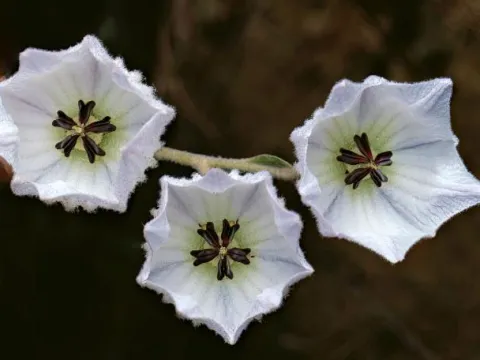
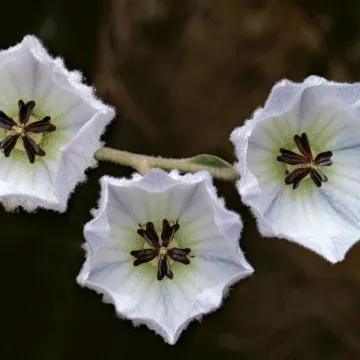
Botanically, the plant is recognized by its grayish-green foliage covered with fine hairs, which serves as a water-retention mechanism. During the spring, it produces large, cup-shaped, pinkish-mauve flowers that stand out against the dense canopy. These flowers are actually composed of persistent petaloid sepals, which maintain their beauty for an extended period.
Successful cultivation of this species requires well-drained, sandy soils with a neutral to slightly acidic pH. It is essential to ensure that the site receives full sun exposure to maintain the shrub's vigor. Over-watering is the primary cause of failure; therefore, irrigation should be carefully managed to avoid root rot, especially during the winter months.
In landscaping, it is used as a focal point in xeriscaping or as part of mixed borders in frost-free climates. Regarding plant health, it is generally hardy but requires good air circulation. Typical issues include fungal infections if the humidity levels are too high or if the soil drainage is inadequate. Maintaining a clean growing environment is key to pest and disease management.
Photo gallery