
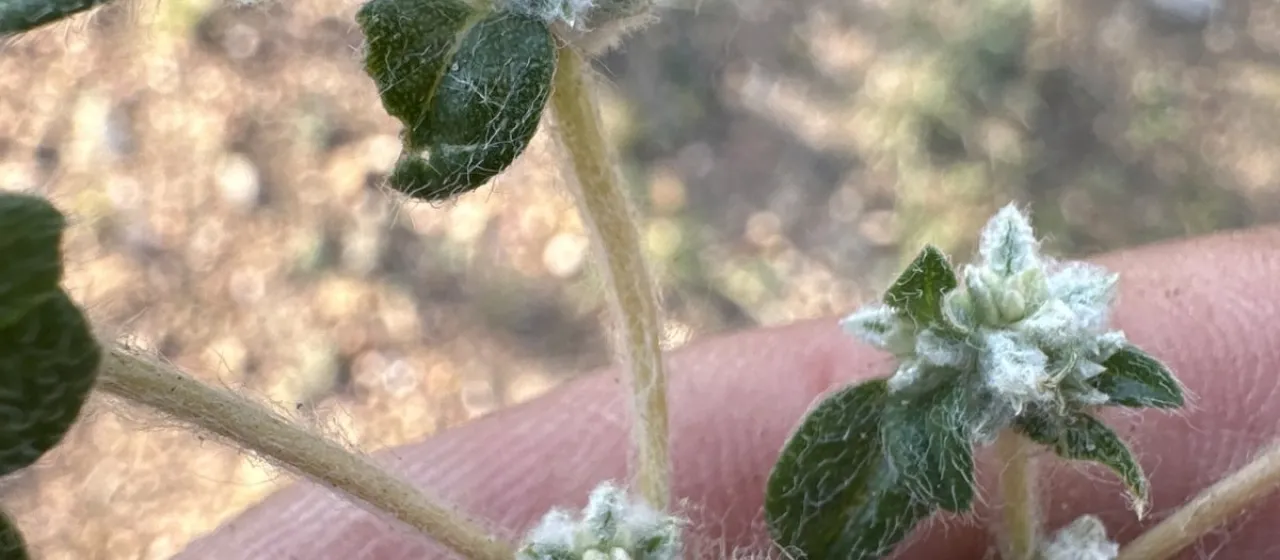
Description
Wooly matweed (Guilleminea lanuginosa) is a distinctive perennial herb that falls within the Amaranthaceae family. Known for its prostrate growth habit, this plant spreads along the ground, creating dense, mat-like patches that are highly effective at covering exposed soil surfaces.
The native range of this species extends throughout the Americas, from the southern regions of the United States down through Mexico into parts of South America. It is typically found in arid and semi-arid environments, thriving in habitats where other vegetation might struggle due to lack of moisture or poor nutrient levels.
Botanically, the plant is recognized by its densely wooly or hairy leaves and stems, which serve as an adaptation to prevent water loss through transpiration. Its small, spherical flower clusters are inconspicuous but contribute to the overall texture of the plant, blooming primarily during the warmer months of the growing season.
Regarding climate and soil, Guilleminea lanuginosa is an excellent candidate for xeriscaping. It requires well-draining soil and exposure to full sun to maintain its vigor. Agronomic management involves minimal intervention, primarily focusing on avoiding overwatering, as the plant is highly susceptible to root rot if the soil remains waterlogged for extended periods.
In terms of agricultural and practical application, the plant serves as a useful tool for soil stabilization in arid landscapes, helping to prevent erosion. While not a primary food crop, it has a history of traditional use by indigenous populations for various medicinal applications, highlighting the importance of conserving such hardy native plant species.
- Exceptional drought resistance.
- Adaptability to nutrient-poor, rocky substrates.
- Natural soil erosion control mechanism.
- Low maintenance requirements in landscapes.