
Description
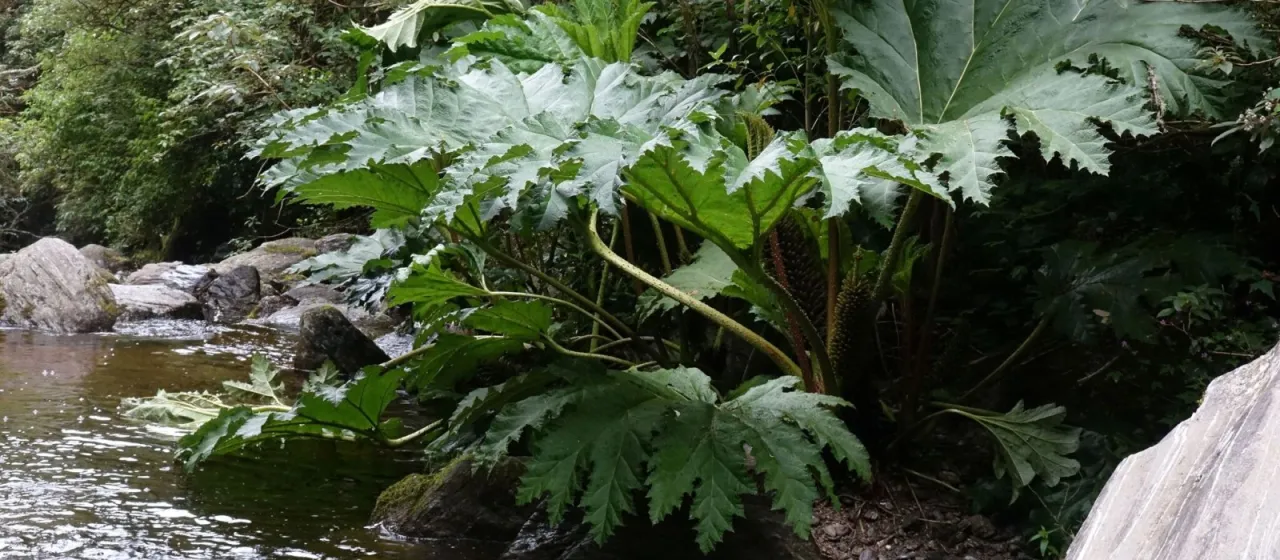
The Chilean rhubarb (Gunnera tinctoria) is a massive perennial herb belonging to the Gunneraceae family. It is widely recognized for its imposing aesthetic, featuring gigantic leaves that can span over two meters, making it one of the most striking specimens in specialized horticulture.
Native to the temperate regions of Chile and Argentina, this plant thrives in cool, humid environments. Its natural habitat is characterized by high rainfall and moderate temperatures, which has made it a popular feature in oceanic climates, particularly in the United Kingdom, Ireland, and parts of the Pacific Northwest.
The plant possesses a robust, fleshy rhizome from which large, palmately lobed leaves emerge on thick, spiny stalks. These stalks can grow to significant lengths, and the overall plant structure acts as a massive photosynthetic surface, optimized for rapid growth in high-moisture environments.
Cultivation requires specific conditions: rich, deep, and consistently moist soils are mandatory for healthy development. The plant is intolerant of drought and wind, both of which can cause rapid desiccation and physical damage to the leaves.
- Ensure protection from frost in colder regions by mulching the rhizome heavily.
- Maintain high humidity levels during the summer months.
- Provide ample space for expansion due to its large footprint.
While often used for its dramatic architectural impact in botanical gardens and large landscapes, it has some historical use in its native range as food, specifically the petioles. The plant is relatively resistant to major pathogens but is frequently targeted by mollusks, specifically slugs and snails, which can cause significant damage to the young, developing foliage during the early spring.