
Description
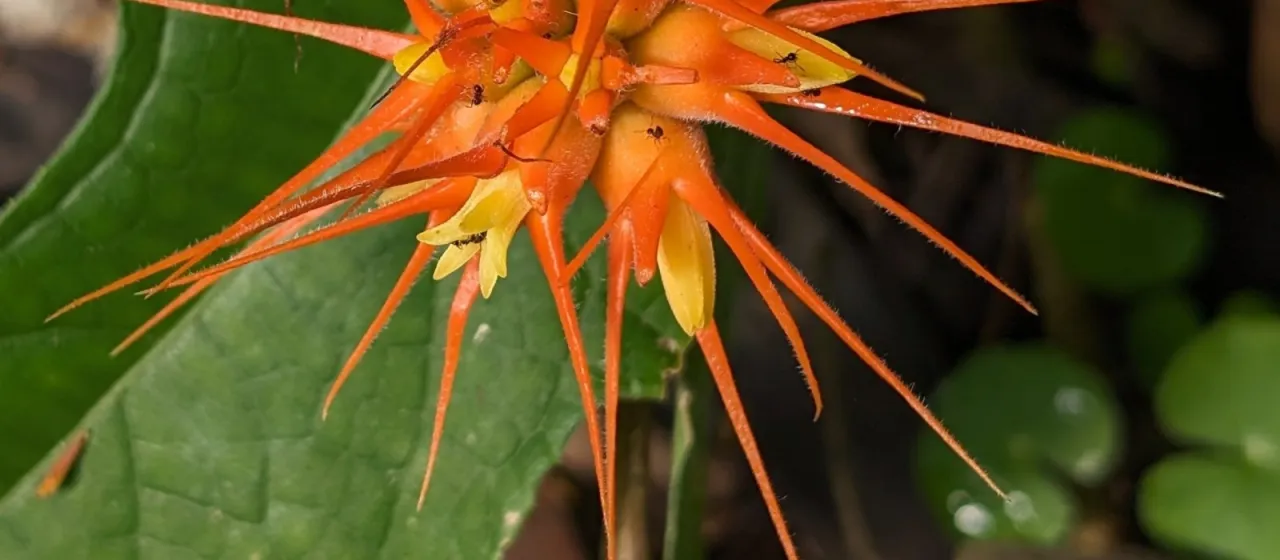
Gurania makoyana is a perennial herbaceous climber belonging to the Cucurbitaceae (gourd) family. Unlike most of its relatives grown for culinary purposes, this species is primarily cultivated for its striking ornamental value, specifically its intense, flame-colored flower clusters that provide a unique aesthetic to tropical-themed displays.
Native to the humid rainforests of South and Central America, the plant exhibits the typical behavior of a forest climber. In its natural range, it uses vigorous, sensitive tendrils to scale canopy trees, seeking out filtered light. This evolutionary background makes it highly sensitive to light intensity and ambient moisture, necessitating specific conditions for successful indoor or greenhouse cultivation.
Botanically, the plant produces long, trailing stems and distinctively shaped foliage. The most significant feature is its inflorescence; the small, vibrant flowers are arranged in head-like structures on long peduncles, which serve as a specialized mechanism to attract hummingbirds. The structure of the plant allows for rapid vegetative growth during the warmer months, making it a dynamic addition to greenhouse environments.
To cultivate Gurania makoyana effectively, specific environmental parameters must be strictly maintained. These include:
- Tropical temperature ranges, ideally between 22°C and 28°C.
- High relative humidity, often requiring supplemental misting.
- Well-draining, nutrient-rich, humus-based soil mixes.
- Consistent moisture, avoiding both waterlogging and total desiccation of the root ball.
When managed in captivity, the plant can be susceptible to common greenhouse pests such as spider mites, especially if the air humidity is insufficient. Fungal issues, including powdery mildew, can occur if ventilation is poor. Regular monitoring and maintaining high cultural standards are essential to prevent these challenges and ensure the long-term health and vigorous blooming of this exotic vine.