Guzmania musaica
Guzmania musaica
Description
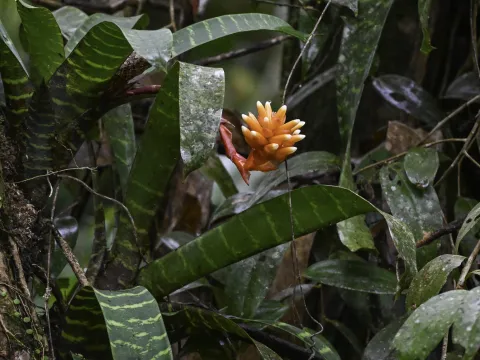
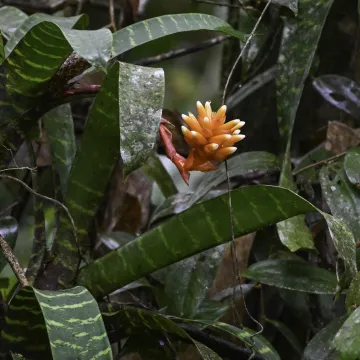
Guzmania musaica is a striking species of flowering plant within the Bromeliaceae family, highly regarded by horticulturists for its ornamental foliage. It is distinct from other bromeliads due to its intricate, mosaic-like patterns on the leaves, which provide year-round decorative appeal even when the plant is not in its blooming phase.
The species originates from the tropical rainforests of Colombia and Panama. In its native habitat, Guzmania musaica is primarily an epiphyte, growing on tree trunks and in rock crevices. This evolutionary background makes the plant particularly well-adapted to high-humidity environments and filtered light conditions found under the forest canopy.
Botanically, the plant features a basal rosette of arching, leathery leaves that grow up to 60–70 cm in length. The leaf blades are marked with dark green, transverse bands that create a visually appealing network. The inflorescence emerges from the center of the rosette, producing a spike with vibrant bracts that remain showy for several months.
Cultivation requires strict adherence to tropical conditions. The ideal temperature range is 20–25°C, with protection from harsh, direct sunlight that can scorch the foliage. The soil must be a light, well-draining epiphytic mix, typically consisting of bark, sphagnum moss, and perlite. Irrigation should be directed into the central water tank of the rosette, ensuring the water remains clean and fresh.
In terms of хозяйственное использование (agricultural/commercial application), Guzmania musaica is primarily used in commercial floriculture and interior landscaping. It is a favored plant for greenhouses, terrariums, and high-end residential interiors. Common pests include scale insects and spider mites, which can be managed with proper sanitation and appropriate systemic treatments if necessary.
- Humidity: 70–80% required
- Substrate: Bark-based mix for epiphytes
- Pest management: Regular inspection for mites
- Flowering period: Long-lasting bracts
Photo gallery