
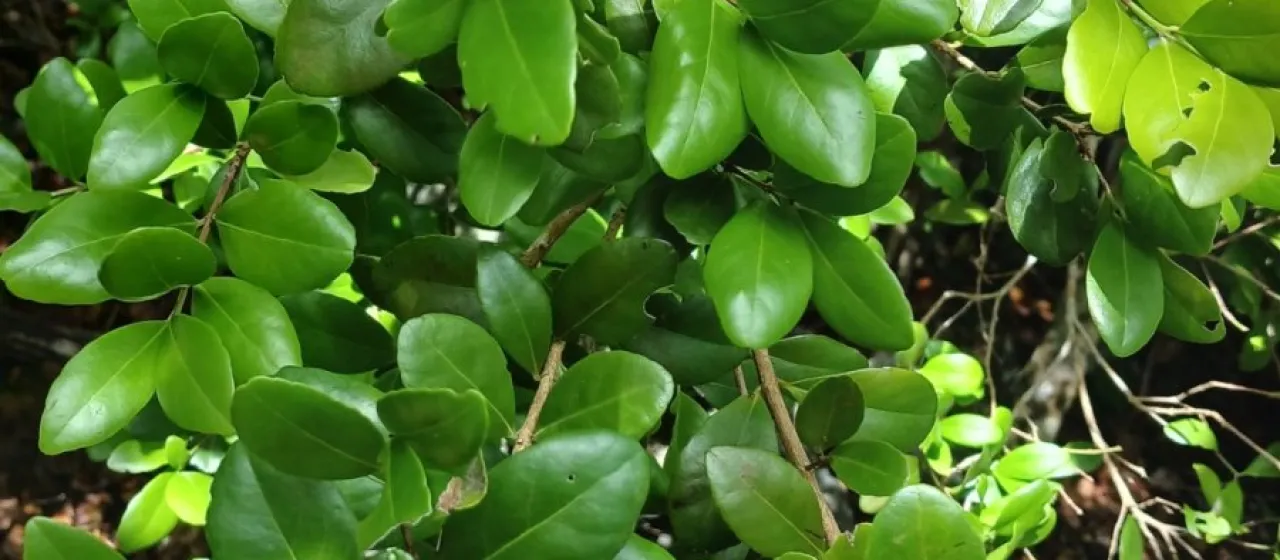
Description
Gyminda latifolia, commonly known as false boxwood, is a perennial evergreen plant belonging to the Celastraceae family. It typically grows as a slow-moving shrub or a small tree characterized by its dense canopy and deep green, leathery foliage that provides year-round visual appeal.
The plant is native to the tropical regions of the Caribbean, southern Florida, and parts of Central America. It thrives naturally in dry forest environments and is particularly well-adapted to limestone-based soils and rocky terrain, showing remarkable resilience in habitats where water availability fluctuates seasonally.
Botanically, the species is recognized by its elliptic, glossy leaves arranged in an opposite pattern along the stems. During the flowering stage, it produces small, inconspicuous blossoms that are typically yellow-green. These are followed by small, dark-colored drupes that serve as a crucial food source for diverse bird populations within its native range.
From an agronomic perspective, Gyminda latifolia requires full to partial sun exposure and exceptionally well-draining soil to prevent root rot. It is not cold-hardy, meaning cultivation outside of tropical or subtropical climates requires greenhouse protection. Fertilizer applications should be moderate, focusing on supporting foliage density rather than rapid growth, which the plant does not naturally express.
The primary use for this species is in ornamental landscaping, particularly in xeriscaping or coastal garden designs where its salt tolerance is an asset. While its wood is known for being dense and durable, it is not used for large-scale timber production due to the plant's relatively small size and ecological importance. Pest monitoring for scale insects and mites is recommended for healthy nursery maintenance.
- Excellent tolerance to saline coastal conditions.
- Low maintenance requirements due to a slow growth rate.
- Preferred for hedges and topiary work in tropical zones.
- Sensitive to overwatering and poorly aerated potting media.