
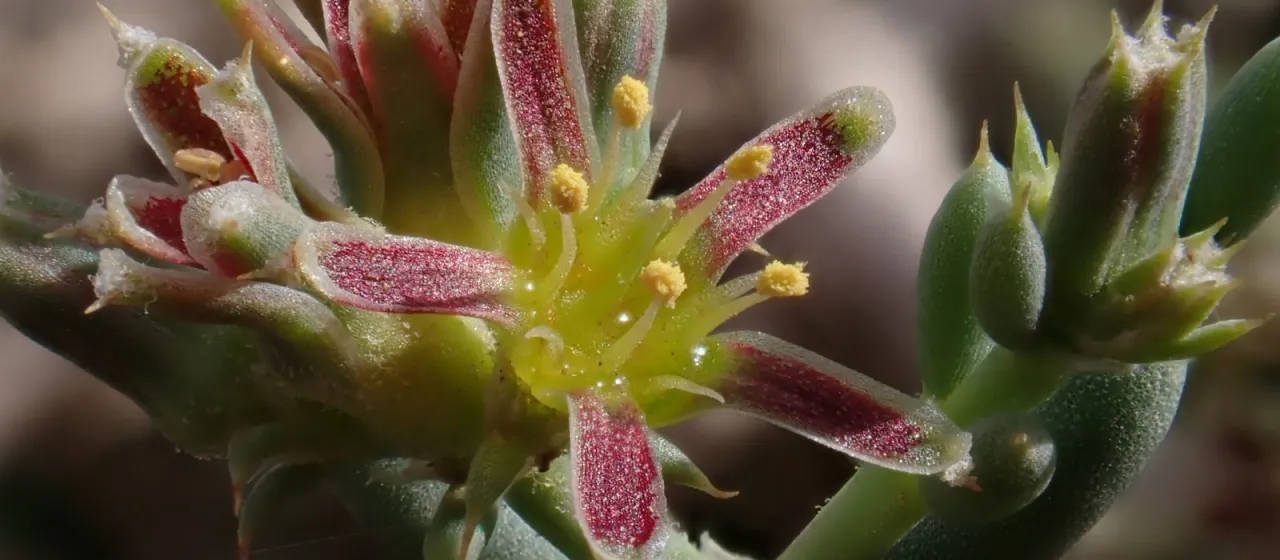
Description
Gymnocarpos decander is a perennial shrub belonging to the Caryophyllaceae family. It is a highly specialized xerophyte, perfectly evolved to withstand the harsh, arid environments of North Africa, the Middle East, and parts of the Arabian Peninsula where water scarcity is the primary limiting factor for plant growth.
The geographic range of this species is largely associated with rocky plateaus, dry wadis, and desert plains. In these regions, the plant thrives in soils with low nutrient content, high salinity, and extreme exposure to direct sunlight. Its distribution pattern makes it a keystone species in desert ecosystems.
Morphologically, the plant is characterized by its woody, compact growth habit and small, succulent-like leaves designed to minimize transpiration. Its root system is exceptionally deep, which provides both anchorage in shifting desert soils and access to minimal groundwater reserves hidden beneath the surface.
In terms of agricultural and management requirements, Gymnocarpos decander demands excellent drainage and minimal competition from other vegetation. It is not a typical crop for traditional farming but is increasingly valued in land restoration projects. Effective management relies on preventing overgrazing to ensure the plant's natural regeneration cycle remains intact.
The primary utility of this plant is in supporting traditional pastoralism, providing a vital source of forage for camels and small ruminants in regions where conventional crops cannot survive. Additionally, its ability to fix soil and prevent sand erosion makes it an important candidate for large-scale desert greening and combating desertification.
- Extreme drought and heat tolerance.
- Tolerance to alkaline and saline soils.
- Critical forage source for desert livestock.
- Active role in desertification control.