
Description
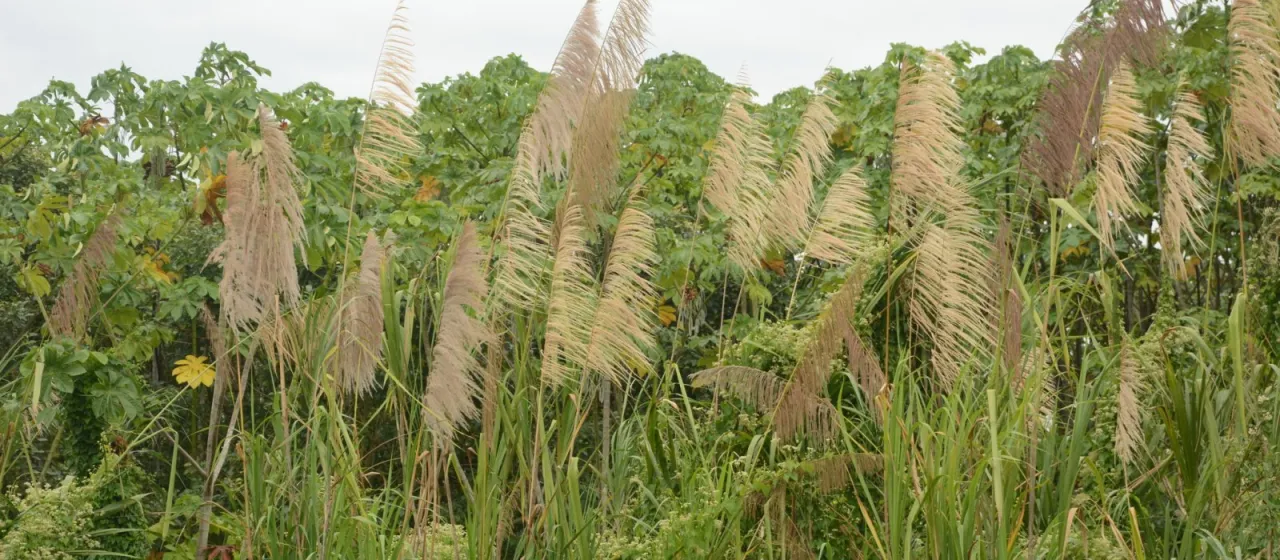
Uva grass (botanical name Gynerium sagittatum) is a massive perennial grass species belonging to the Poaceae family. Often referred to as "giant cane," it stands out due to its impressive height, which can reach up to 10 meters, making it one of the tallest grasses in the tropical world. It is highly valued for its rapid biomass accumulation.
The plant originates from the tropical regions of Central and South America. Its natural habitat is primarily concentrated along riverbanks, wetlands, and floodplain areas. Because it thrives in water-saturated environments, it is commonly found colonizing disturbed lands and riparian corridors throughout its extensive range from Mexico down to Argentina.
Botanically, Gynerium sagittatum is characterized by thick, woody stems and long, lanceolate leaves with serrated edges. The plant forms dense clumps that can span several meters in diameter. Its root system is exceptionally robust, providing strong anchorage that makes it an excellent candidate for environmental restoration and soil stabilization projects in tropical climates.
The cultivation of Uva grass requires specific environmental conditions, primarily intense sunlight and constant access to soil moisture. While it is quite hardy, it thrives best in deep, fertile alluvial soils. Agronomic management involves maintaining healthy stands through regular thinning of old stalks, which promotes new growth and ensures better aeration to prevent the development of local plant pathogens.
In terms of economic utility, Uva grass is a versatile resource. It is widely utilized in traditional construction for weaving panels, roofing materials, and partitions. Beyond its artisanal use, it serves as a raw material for the paper industry and as a renewable source of biomass for bioenergy. Furthermore, its role in preventing riverbank erosion is considered its most critical ecological service in agricultural landscapes.