
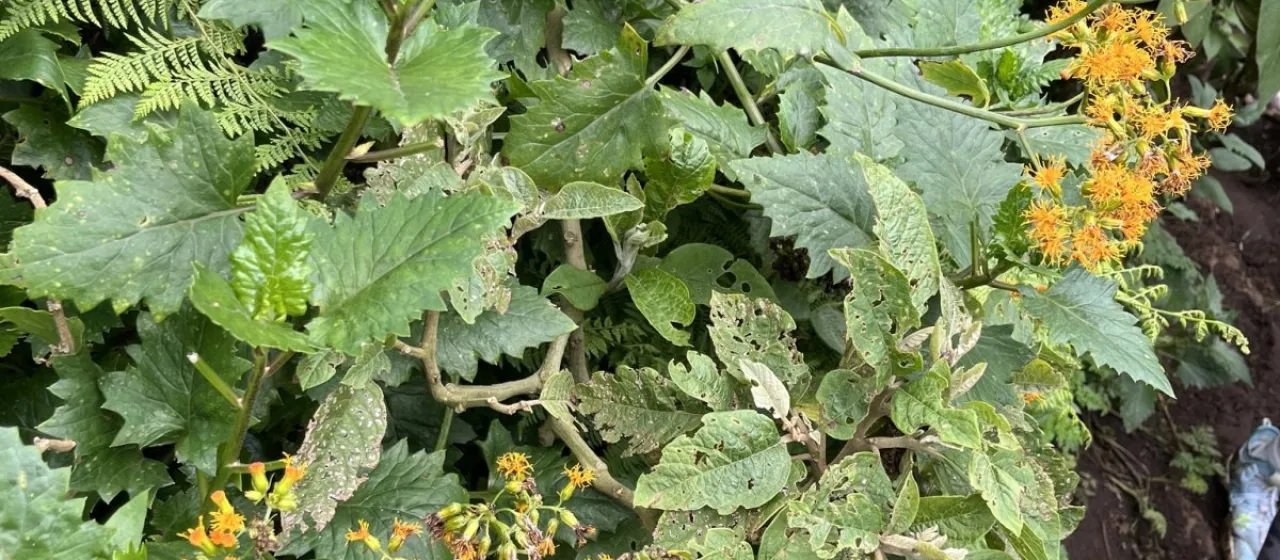
Description
Gynura scandens is a perennial evergreen herbaceous plant or semi-shrub belonging to the large Asteraceae family. Known for its climbing growth habit, this species is highly valued in horticulture for its rapid development and ornamental foliage, making it a distinct subject for controlled environment agriculture and indoor landscaping.
Originating from the tropical regions of Africa and Asia, the plant thrives in humid environments. In its natural habitat, Gynura scandens acts as a climber, utilizing its long, flexible stems to reach sunlight in the dense understory of tropical forests. This adaptive behavior defines its requirements when cultivated as a commercial or decorative crop.
Botanically, the plant features elongated, leafy stems that can become semi-woody over time. The leaves are typically ovate or lanceolate, often covered in fine hairs that give them a distinctive texture. The inflorescences consist of composite flower heads, typical of the Asteraceae family, often exhibiting vibrant orange or yellow hues.
Successful cultivation requires a warm, stable climate with high ambient humidity. The soil must be fertile, well-draining, and rich in organic matter to support vigorous growth. Agricultural management involves regular but controlled irrigation to prevent root rot while ensuring the substrate remains consistently moist, especially during the active growing season.
The primary economic use of Gynura scandens lies in the ornamental plant trade, specifically for vertical gardening and interior decoration. Regarding plant health, cultivators should monitor for common pests such as spider mites and mealybugs, which prefer the sheltered undersides of the leaves. Proper ventilation and regular pruning are essential techniques to maintain plant vigor and prevent the development of fungal infections.
- Watering: Consistent moisture, avoiding waterlogged soil.
- Light: Bright, indirect light to maintain leaf health.
- Soil: Well-drained, nutrient-rich potting mix.
- Propagation: Easily propagated via stem cuttings.