
Description
Haemodorum corymbosum is a perennial herbaceous plant belonging to the Haemodoraceae family. This species is native to Australia and is recognized for its distinctive appearance and unique flowering structures. It serves as a fascinating example of the specialized flora that has evolved in the specific environmental niches of the Australian continent.
The plant originates from the arid and semi-arid regions of Australia. Its distribution is closely linked to well-drained soil types, such as sandy loams, which are characteristic of its native habitat. As an adaptation to its environment, the plant typically exhibits a clear seasonal growth cycle, with a dormant period during the driest months of the year.
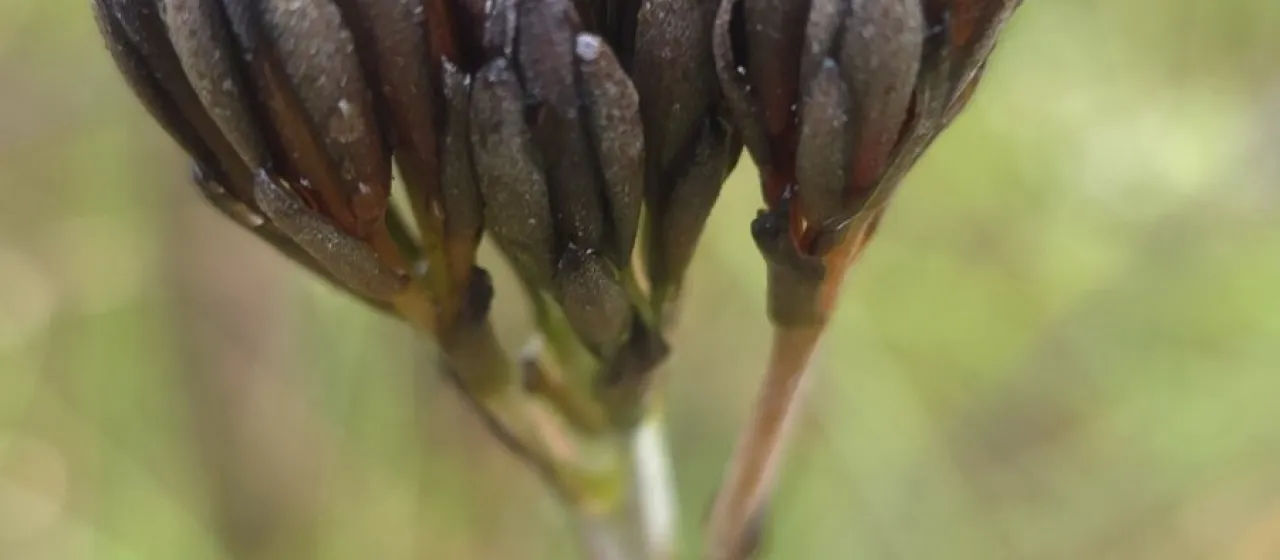
Botanically, the species is characterized by linear, sword-shaped leaves and erect inflorescence stems. The flowers are arranged in a corymb-like cluster, and their pigmentation is a notable feature, often presenting deep red or dark, nearly black hues. The root system consists of fleshy rhizomes, which are capable of storing nutrients to support the plant during environmental stress.
Cultivation requirements for this species are specific and require careful management. Key factors include:
- Excellent drainage to prevent root rot.
- High light intensity to maintain structural integrity.
- Controlled irrigation, avoiding water saturation.
- Substrates with low nutrient density, mimicking native soil conditions.
The primary use of Haemodorum corymbosum is in specialized botanical collections and ornamental horticulture. Because of its unusual aesthetic, it is often sought after by enthusiasts of exotic Australian plants. Maintenance involves protecting the plant from fungal pathogens that thrive in damp conditions and monitoring for common glasshouse pests like aphids, which can affect the foliage if environmental controls are neglected.