Hakea gibbosa
Hakea gibbosa
Description
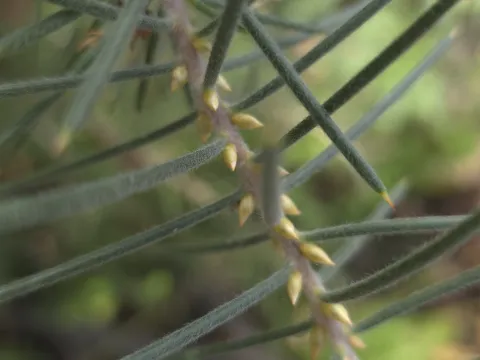
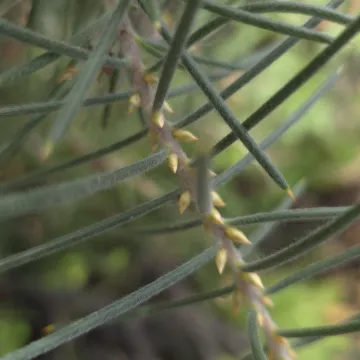
Hakea gibbosa, commonly known as the rock hakea, is a dense, evergreen shrub belonging to the Proteaceae family. Native to the coastal regions of southeastern Australia, it is highly regarded for its resilience and unique appearance. The plant typically reaches heights of 2 to 3 meters, featuring stiff, needle-like foliage that provides excellent defense against herbivores.
The species naturally thrives in diverse environments, ranging from coastal dunes to rocky heathlands. Its distribution reflects a high degree of adaptation to nutrient-poor soils and seasonal moisture fluctuations. This hardiness makes it a compelling choice for water-wise gardening and xeriscaping in regions with similar Mediterranean-type climates.
Botanically, the plant is characterized by its woody, globular fruit capsules that exhibit a distinct lumpy or "gibbosus" surface. These capsules remain on the branches for extended periods and eventually release winged seeds. The flowers are typically white or cream-colored, appearing in clusters along the branches during late winter and spring months.
Cultivation of Hakea gibbosa requires strict adherence to soil drainage standards. Like many plants in the Proteaceae family, it has evolved specialized root structures that are extremely efficient at extracting phosphorus from soil; consequently, excessive use of phosphate-rich fertilizers can be toxic to the plant. It prefers full sun exposure to maintain its dense, compact growth habit.
- Effective for creating impenetrable privacy screens.
- Excellent habitat for native small birds and insects.
- Highly tolerant of wind and coastal salt spray.
- Decorative value of the unusual, woody seed pods.
In terms of plant health, the most significant threat is Phytophthora root rot, which is triggered by poor drainage and waterlogged soil conditions. While generally pest-resistant, the plant can occasionally suffer from scale insects or mealybugs in stagnant air environments. Providing ample space for air circulation and avoiding overhead watering are fundamental practices to ensure long-term plant vitality.
Photo gallery