
Description
Alkali buttercup (Halerpestes cymbalaria) is a perennial herbaceous plant belonging to the Ranunculaceae family. It is a specialized species known for its ability to thrive in saline and waterlogged environments where most conventional crops would fail. Its classification has shifted in recent years, separating it from the wider Ranunculus genus due to distinct biological adaptations.
The plant is native to North America and parts of Eurasia, primarily occupying coastal regions, salt marshes, and moist meadows. Its geographical range highlights its robustness as a pioneer species in sensitive ecosystems. In agricultural settings, it is often found as an indicator species for specific soil salinity levels and moisture availability.
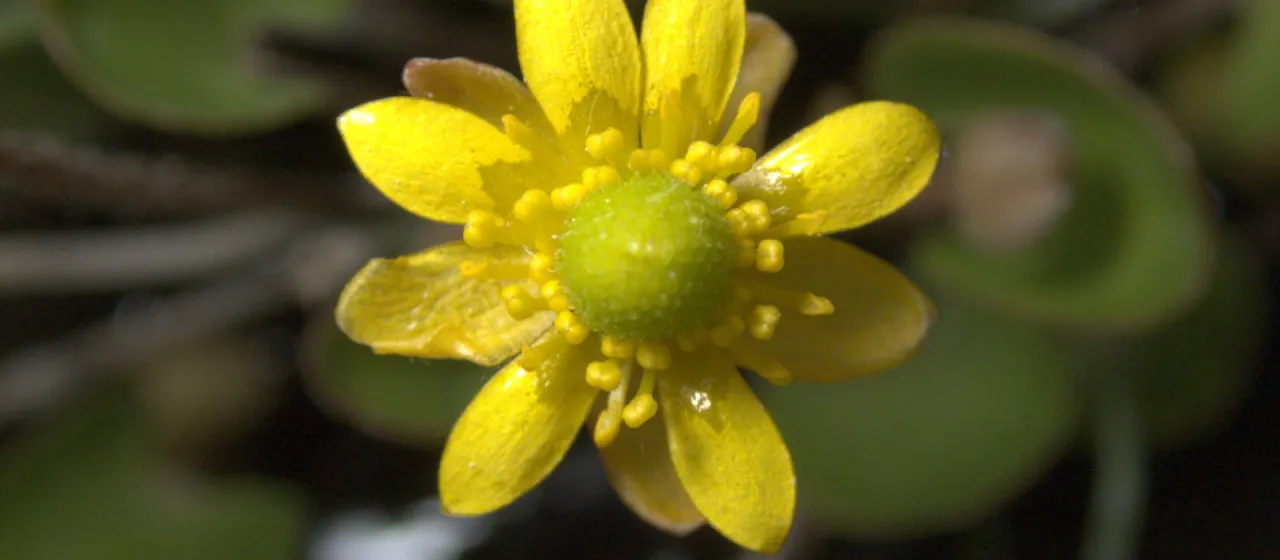
Botanically, the species is characterized by its stoloniferous growth habit. It develops creeping stems that root at the nodes, creating a dense, mat-like cover over the soil surface. The leaves are typically basal, rounded or kidney-shaped, while the small, yellow flowers emerge on slender stalks, facilitating rapid seed dispersal in wet habitats.
Regarding climate and soil requirements, Halerpestes cymbalaria prefers moist, somewhat alkaline, or saline substrates. It is exceptionally tolerant to salt-affected soils, which makes it an ideal candidate for reclamation projects in irrigated lands that suffer from secondary salinity. Standard agronomic practices involve maintaining high moisture levels and preventing excessive competition from taller, invasive weed species.
The primary economic and agricultural use of Alkali buttercup lies in soil stabilization and phytoremediation. It acts as an excellent ground cover, protecting topsoil from erosion in wet, salty areas. While it is not a major forage crop, it provides necessary ecosystem services by stabilizing canal banks and improving soil structure in challenging environments that require sustainable land management solutions.
- Superior salt tolerance for saline soil remediation.
- Rapid propagation via creeping stolons.
- Erosion control in waterlogged and salt-affected lands.
- Adaptable to diverse and harsh environmental conditions.