
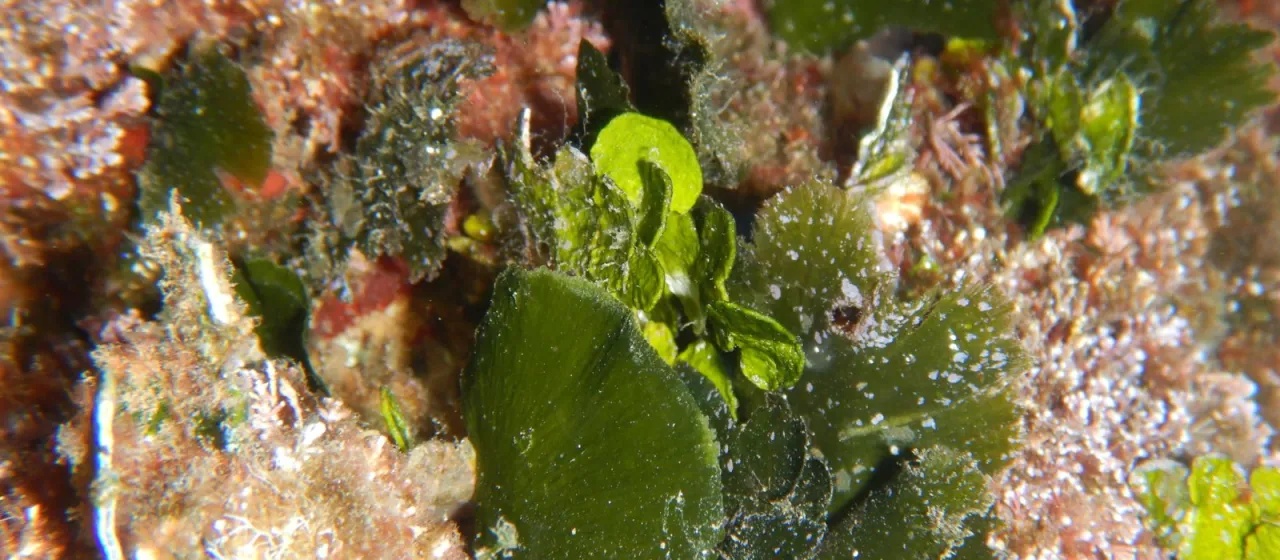
Description
Halimeda tuna is a prominent species of green marine algae belonging to the family Halimedaceae. Distinguished by its calcified, segment-based morphology, it functions as a primary producer in marine ecosystems, contributing significantly to the biomass of tropical and subtropical coastal environments worldwide.
The native range of this species extends across the Mediterranean Sea and various tropical Atlantic regions. It thrives in well-lit, shallow-water habitats, often anchoring itself into sandy substrates or rocky crevices. Its distribution is closely linked to the availability of nutrients and the transparency of the water column.
Botanically, Halimeda tuna is composed of flattened, disk-like segments connected by non-calcified joints, which provide flexibility to withstand water currents. The primary physiological feature is the ability to deposit calcium carbonate (aragonite) into the cell walls, effectively creating a hard, mineralized skeleton that protects the alga from herbivory.
Cultivation requirements for this organism include high-intensity light levels and water rich in dissolved minerals, particularly calcium and magnesium. In controlled environments or aquaculture setups, maintaining stable pH levels is critical; fluctuations in acidity can lead to the rapid dissolution of the algal segments, causing the plant to disintegrate.
Economic and ecological applications of Halimeda tuna are centered on its role in reef building and carbon sequestration. Beyond its appeal to marine hobbyists for aquarium display, it is an essential study subject for marine biologists examining the impacts of ocean acidification on calcifying organisms and their ability to sustain coral reef structural integrity.
- Calcified disk segments composed of aragonite.
- Key role in sand production for reef systems.
- Photosynthetic organism requiring high light intensity.
- Sensitivity to seawater acidification and pH drops.