
Description
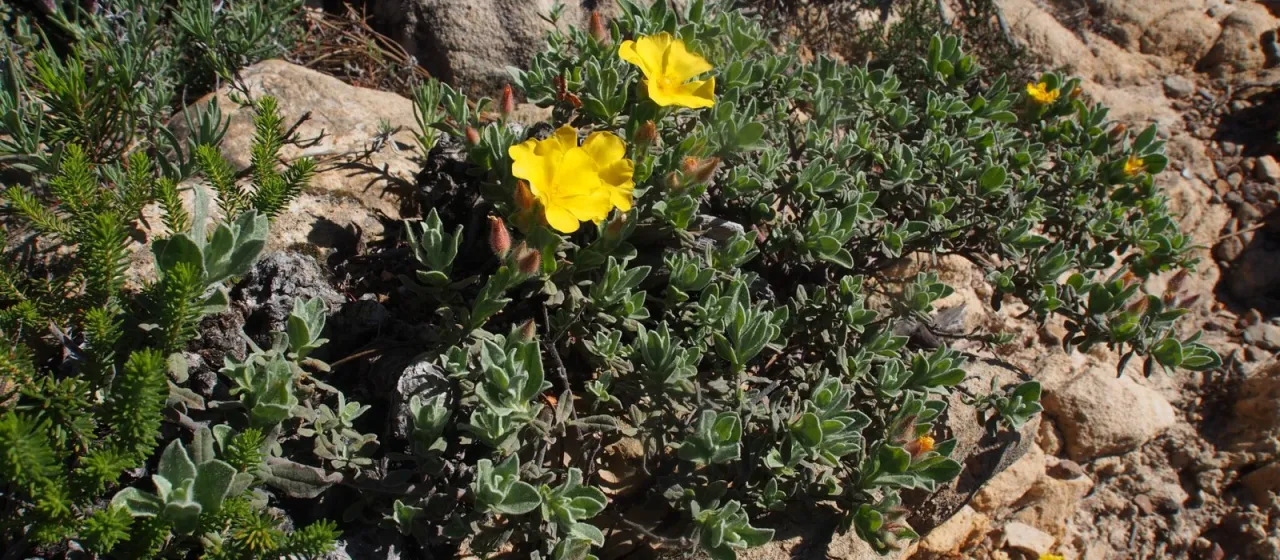
Halimium lasianthum, commonly referred to as the woolly rockrose, is a dense evergreen shrub belonging to the Cistaceae family. It is widely recognized for its vibrant yellow blossoms, which feature distinct chocolate-maroon blotches at the base of the petals, providing a significant visual interest during the late spring and early summer flowering period.
Native to southwestern Europe, particularly the Iberian Peninsula, this species has evolved to thrive in harsh, dry environments. Its historical distribution is centered in rocky, well-drained shrublands, making it a highly resilient plant for cultivation in regions that experience hot, dry summers and mild winters, characteristic of Mediterranean climates.
The botanical structure of the plant consists of greyish-green, tomentose (woolly) foliage, which serves as a protective adaptation against moisture loss and intense solar radiation. The plant typically reaches a height of 60 to 90 centimeters, forming a low-spreading habit that is ideal for ground cover applications or rock garden accents.
Agronomic requirements for successful cultivation include:
- full sun exposure for optimal blooming;
- sandy or gravelly soil with excellent drainage;
- neutral to acidic pH levels in the substrate;
- minimal water intake once the root system is established.
In landscaping, this crop is valued for its low-maintenance profile and its ability to withstand poor, infertile soils. While it is rarely bothered by serious pests, it is essential to ensure adequate airflow and avoid waterlogged roots to prevent fungal infections such as root rot. Light pruning after the flowering season is recommended to maintain a tidy and compact shape.