
Description
The Salt tree (lat. Halimodendron halodendron), also known as the Siberian salt tree, is a deciduous shrub belonging to the Fabaceae family. It is widely recognized for its exceptional hardiness and its ability to thrive in extremely saline environments, making it a unique asset for ecological agriculture.
Native to the arid regions of Central Asia and the steppe zones of Southern Russia and Mongolia, the Salt tree is naturally adapted to harsh, saline, and drought-prone habitats. Its geographical range extends across areas where traditional crop production is often limited by poor soil quality and lack of moisture.
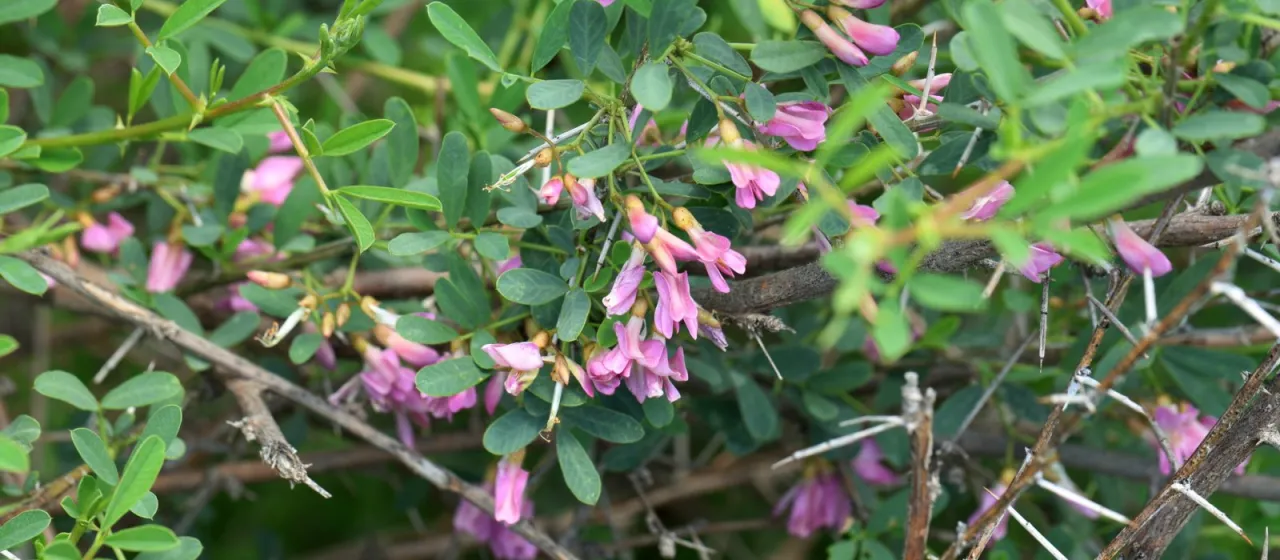
Botanically, the plant is characterized by its silvery-green compound leaves and stiff, thorny branches which act as defensive features. Its pink, pea-like flowers appear in late spring or early summer, providing a significant nectar source. The root system is deep and extensive, helping the plant stabilize sandy soils and resist drought.
Cultivation requirements for the Salt tree are minimal, as it is a low-maintenance species. It thrives in full sunlight and prefers alkaline or neutral soils. Once established, it requires very little irrigation, making it a sustainable choice for xeriscaping or land reclamation projects in degraded areas.
The main agricultural use of the Salt tree lies in land stabilization and windbreaks. Its robust nature allows it to serve as a natural barrier against wind erosion. Furthermore, it is largely resistant to common plant diseases and insect pests, significantly reducing the need for chemical interventions in the management of these shrublands.
- High salt tolerance
- Exceptional drought resistance
- Effective soil stabilizer
- Valuable forage and nectar source