
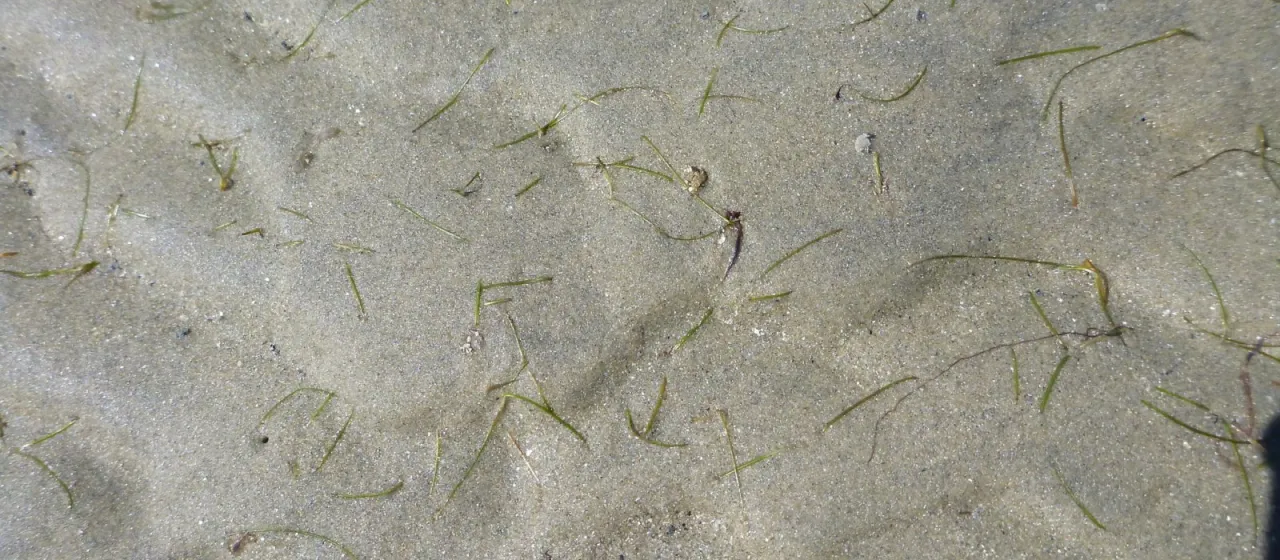
Description
Halodule uninervis is a distinct species of seagrass belonging to the family Cymodoceaceae. While not a traditional terrestrial agricultural crop, it is managed as a vital ecological resource in coastal conservation and marine habitat restoration efforts aimed at maintaining healthy underwater meadows.
The plant originates from tropical and subtropical coastal waters, spanning across the Indo-Pacific region, including the Red Sea, the Persian Gulf, and northern Australia. It thrives in diverse marine environments, typically found on sandy or muddy substrates in intertidal and shallow subtidal zones, where it demonstrates remarkable resilience to fluctuating water levels and salinity.
Botanically, the plant is characterized by its rhizomatous growth pattern, spreading horizontally across the seabed to anchor itself. The leaves are narrow and linear, possessing a single distinct midrib, which serves as a primary diagnostic feature. Reproduction occurs primarily through vegetative propagation via rhizomes, although sexual reproduction via seeds also contributes to the genetic diversity of these underwater colonies.
Optimal environmental requirements for the species include high light intensity, clear water, and moderate water movement to support efficient photosynthesis. In restoration contexts, professional approaches involve transplanting seagrass units into degraded areas, requiring careful monitoring of sediment stability and nutrient levels. Proper site selection is crucial to ensure long-term survival and spread of the seagrass meadow.
Economic and ecological utility of this seagrass includes:
- providing nursery grounds for economically important fish and crustacean stocks;
- acting as a primary food source for endangered marine megafauna, such as dugongs and sea turtles;
- enhancing water quality through nutrient uptake and sedimentation processes;
- contributing significantly to blue carbon sequestration, mitigating climate change impacts.
Typical threats to Halodule uninervis populations include water turbidity, eutrophication, and coastal development. Pathological threats are often linked to stress-induced senescence, where extreme temperature shifts or light deprivation lead to population declines. Furthermore, excessive grazing pressure from herbivores and the presence of invasive epiphytic algae can significantly hinder the productivity and spatial expansion of these seagrass beds.