
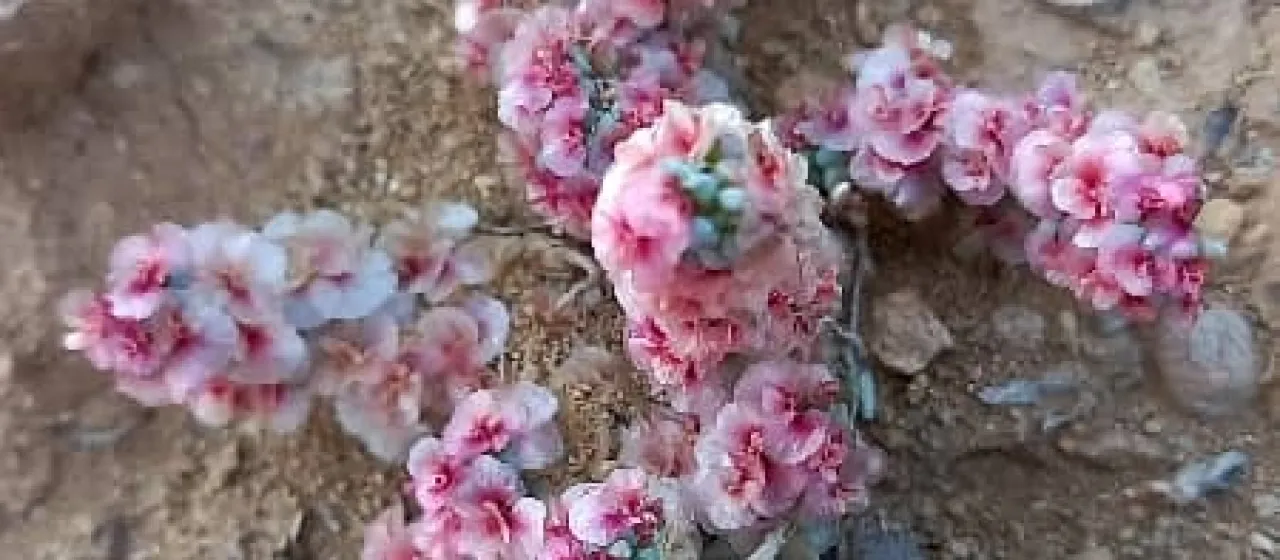
Description
Halogeton sativus is an annual herbaceous plant belonging to the Amaranthaceae family. It is widely recognized as a highly specialized halophyte, capable of thriving in saline environments that would be lethal to most conventional agricultural crops. Its physiology is perfectly adapted to sequestering inorganic salts within its cellular structures.
The origin of this species is traced back to the arid regions of the Mediterranean and North Africa. It has successfully spread across various desert and semi-desert ecosystems globally, demonstrating a remarkable ability to colonize marginal lands with high salinity levels and low nutrient availability.
Botanically, Halogeton sativus is characterized by its succulent, cylindrical leaves and a branched stem structure. These features allow the plant to maintain turgor pressure even under conditions of high osmotic stress. Its root system is exceptionally deep, enabling the plant to tap into scarce moisture reserves hidden deep within the soil profile.
Regarding cultivation requirements, the plant demands full sun exposure and well-drained, porous soils. It is highly resistant to drought and can tolerate intense solar radiation, making it suitable for regions with limited rainfall. Proper management involves controlling plant density to ensure each specimen has sufficient access to the limited available water.
The primary economic use of this culture lies in land restoration and phytoremediation of salt-affected soils. By extracting excess salts, it helps in the biological reclamation of barren fields. Among its threats, soil-borne pathogens and specific herbivorous insects are the most significant, though it remains a remarkably hardy species in its native climate.