
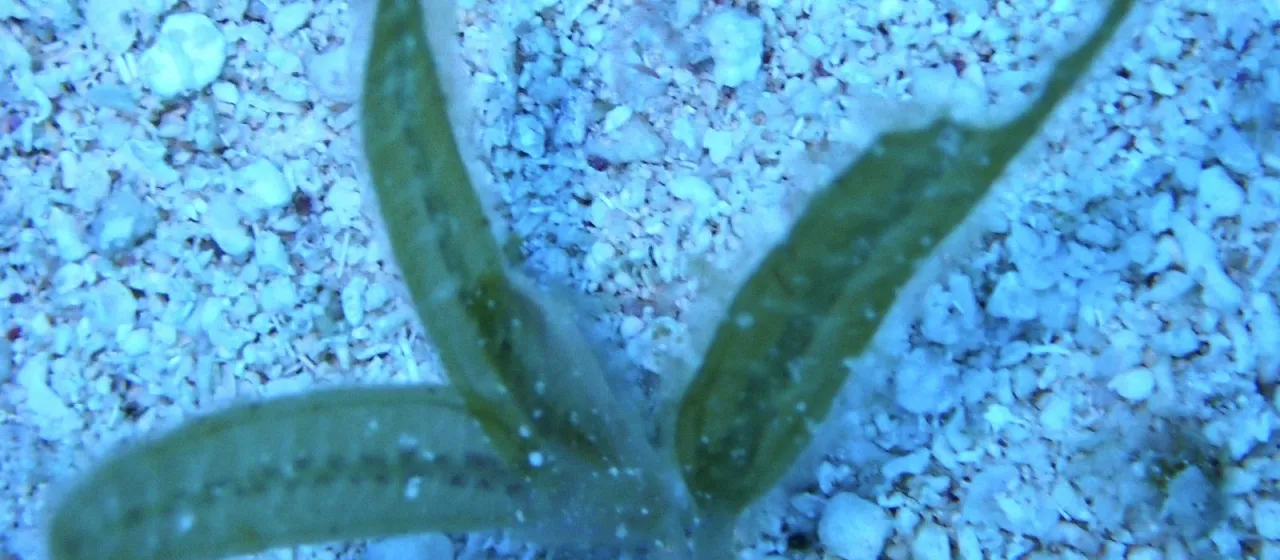
Description
Halophila stipulacea is a species of seagrass in the family Hydrocharitaceae, known for its rapid colonization capabilities and significant role in marine biodiversity. It represents a specialized segment of marine "farming" where restoration and carbon sequestration are the primary objectives for large-scale cultivation.
Originating from the Indian Ocean and the Red Sea, this species has expanded its range significantly through the Suez Canal into the Mediterranean Sea and later into the Caribbean. This migration highlights the plant's robust nature and its ability to outcompete native species in diverse marine environments.
Botanically, it consists of creeping rhizomes that produce vertical shoots with pairs of oblong to elliptic leaves. The plant exhibits high phenotypic plasticity, allowing it to adapt to varying light intensities and water temperatures. These features make it a resilient subject for study in aquatic plant biology and coastal management.
In terms of cultivation requirements, Halophila stipulacea thrives in sandy to silty-sand sediments. Successful establishment depends on low turbidity, as high sediment load blocks the necessary light for photosynthesis. Unlike terrestrial crops, its "agronomy" focuses on water quality maintenance and substrate stabilization rather than fertilization and irrigation.
The economic and ecological utility of this seagrass lies in its capacity to act as a carbon sink and a habitat provider for various marine organisms. While it is rarely a target for commercial harvest, its management is vital for the health of coastal zones. Major risks include pollution, physical damage from anchoring or dredging, and the disruption of local hydrodynamics that can lead to habitat loss.