
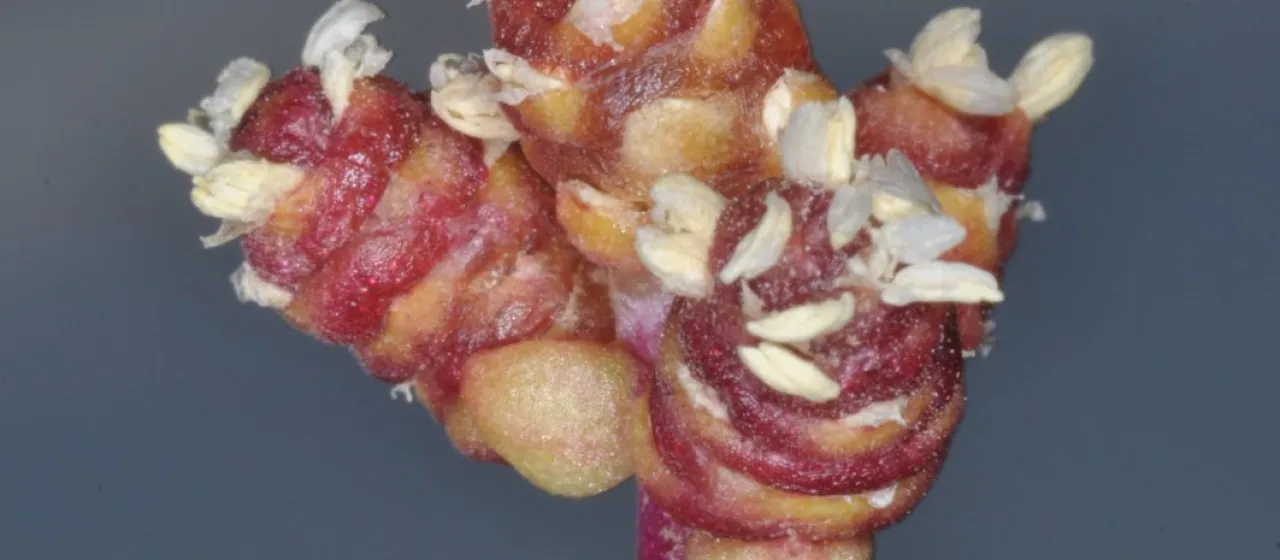
Description
Halophytum ameghinoi is a distinctive herbaceous plant that constitutes the sole member of the Halophytaceae family. This species is categorized as a true halophyte, possessing a remarkable ability to survive in environments where soil salinity levels exceed the tolerance thresholds of most standard agricultural crops.
The plant is native to the arid landscapes of Argentina, particularly within the Patagonian region. Its natural habitat consists of salt pans and desert steppes, characterized by severe water scarcity and high concentrations of minerals, specifically sodium and chloride, in the soil profile.
Botanically, Halophytum ameghinoi exhibits succulent features, including fleshy stems and leaves designed to conserve moisture during prolonged droughts. The root system is deep-reaching, allowing the plant to tap into subsurface moisture sources that remain inaccessible to more shallow-rooted species in saline environments.
Agronomic requirements for this crop focus on high light intensity and well-drained, saline-affected soil. Unlike traditional crops, it does not require soil desalination efforts; in fact, its physiological development is optimized in the presence of saline conditions, which facilitate its metabolic processes and ionic balance.
The economic potential for Halophytum ameghinoi lies in its use for the rehabilitation of degraded land or as a specialized forage crop in arid, saline-stressed regions. Management must be diligent against typical threats, which include:
- Root rot pathogens exacerbated by waterlogging.
- Local arid-zone pests that target succulent vegetation.
- Soil compaction issues which can hinder initial establishment.