
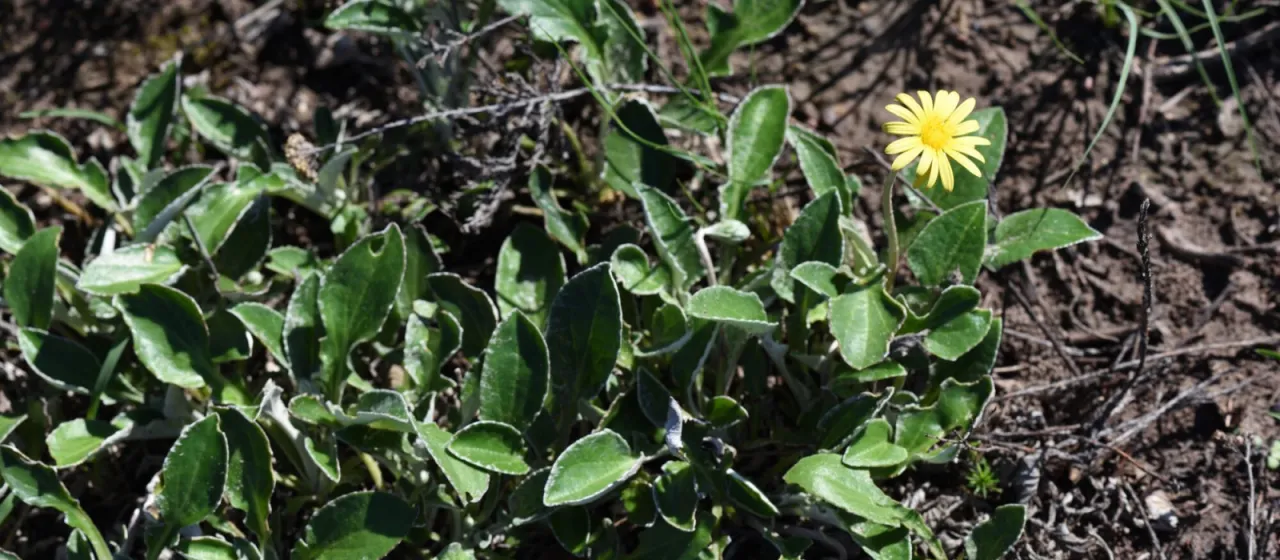
Description
Haplocarpha lyrata is a perennial herbaceous plant belonging to the Asteraceae family. Known for its distinct rosette-forming habit, this species is highly valued in horticulture as an effective groundcover that adds visual interest through its foliage contrast, featuring deep green leaves with silvery undersides.
The plant originates from Southern Africa, where it has adapted to various environmental conditions ranging from coastal regions to inland slopes. This native resilience makes it a strong candidate for cultivation in various regions across the globe, provided that the microclimate mimics its natural requirement for bright, open spaces.
Botanically, it is characterized by its lyrate-shaped leaves and yellow, daisy-like flower heads that appear on relatively short stems. The plant spreads via a moderate root system, forming dense mats that help suppress weeds in landscaped areas. Its growth pattern is particularly suited for rocky or sandy soil compositions common in arid or semi-arid environments.
Cultivation requirements focus heavily on soil drainage. Haplocarpha lyrata thrives in well-draining, sandy-loam soils and requires full sun to partial shade for optimal growth. Excessive watering, particularly during cooler months, can be detrimental to the root system, so irrigation should be managed with careful attention to the soil moisture levels.
Regarding хозяйственное usage, it is mainly utilized in ornamental landscaping and xeriscaping. Common pests include aphids and mites, which can be managed with integrated pest management techniques. Disease resistance is generally high, though growers should be vigilant against root pathogens that develop in waterlogged soil conditions.