
Description
Haplopappus foliosus is a perennial species belonging to the Asteraceae family. Native to the rugged terrains of Chile, this plant has evolved to thrive in environments characterized by long, dry summers and mild winters, making it a robust candidate for xeriscaping and sustainable landscape design.
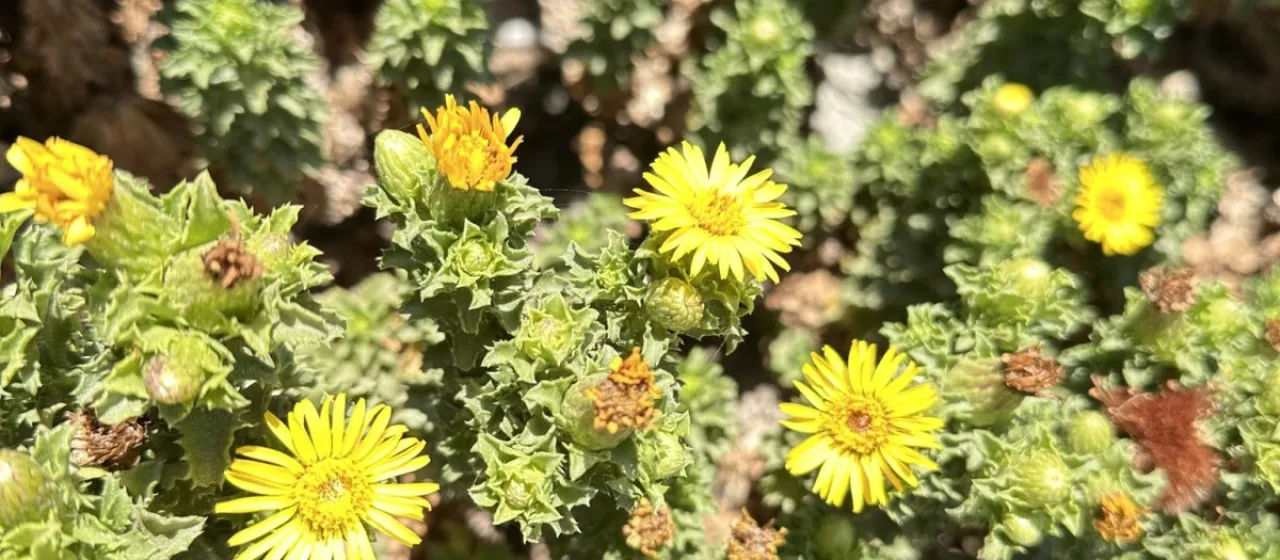
Botanically, it is classified as a low-growing subshrub with dense, foliage-rich stems that exhibit semi-succulent characteristics. The leaves are typically thick and leathery, an evolutionary adaptation to minimize transpirational water loss. The inflorescences consist of typical daisy-like flower heads with bright yellow florets that are highly attractive to local pollinators.
Successful cultivation of Haplopappus foliosus relies on mimicking its natural habitat. The soil must be exceptionally well-draining, such as sandy or rocky substrates, to prevent root rot. It demands full sun exposure, as any significant shading can result in weak, spindly stems and poor flowering performance. Soil pH should ideally be neutral to slightly acidic.
Agrotechnical management is relatively straightforward due to the plant's drought tolerance. Once established, it requires minimal irrigation, primarily during extreme dry spells. Over-fertilization should be avoided, as it encourages soft growth that is more susceptible to pests and diseases. Regular pruning after the flowering season helps maintain a compact, vigorous shape.
The primary economic and practical use of this species is in horticulture, where it is utilized for rock gardens, dry slopes, and arid-land restoration. Furthermore, it serves as a subject of botanical study regarding its secondary compounds and environmental resilience. While it is generally hardy, growers should remain vigilant against common pests like aphids during the active growing season.