
Description
Moss bellheather (Harrimanella hypnoides) is a miniature evergreen dwarf shrub belonging to the Ericaceae family. The plant forms dense, mat-like cushions that resemble moss, which is a structural adaptation allowing it to survive in the harsh, wind-swept conditions of alpine and arctic regions.
The native range of this species covers circumpolar areas of the Northern Hemisphere, including the Arctic tundra, mountains of Scandinavia, Greenland, and North America. It thrives in habitats characterized by prolonged snow cover, preferring moist environments such as streambanks, wet stony slopes, and acidic rocky soils.
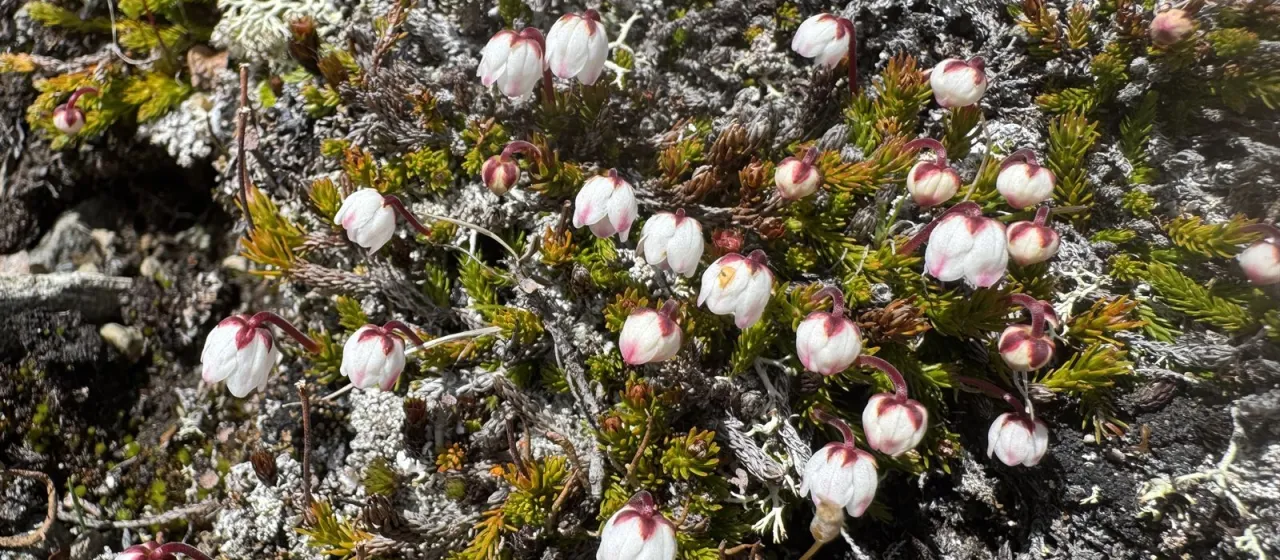
Botanically, the plant consists of thin, creeping stems densely covered with tiny, scale-like leaves. During the summer flowering season, it produces solitary, white, bell-shaped flowers on slender reddish pedicels. It is a slow-growing species, reflecting its adaptation to short growing seasons and extreme cold temperatures.
Cultivation of Harrimanella hypnoides is challenging and requires precise environmental controls. Successful growth depends on providing acidic, well-draining, yet consistently moist soil, typically rich in peat or grit. The species is highly sensitive to root-zone overheating; therefore, it is best suited for specialized rock gardens that offer protection from direct intense heat and ensure constant air circulation.
Its primary use is in ornamental rock garden design and botanical collections. While the plant generally lacks significant pests and diseases in its natural habitat, it is susceptible to fungal decay in garden settings. This usually occurs due to poor drainage or heat stress, which compromises the root health of this delicate, cold-loving perennial.