
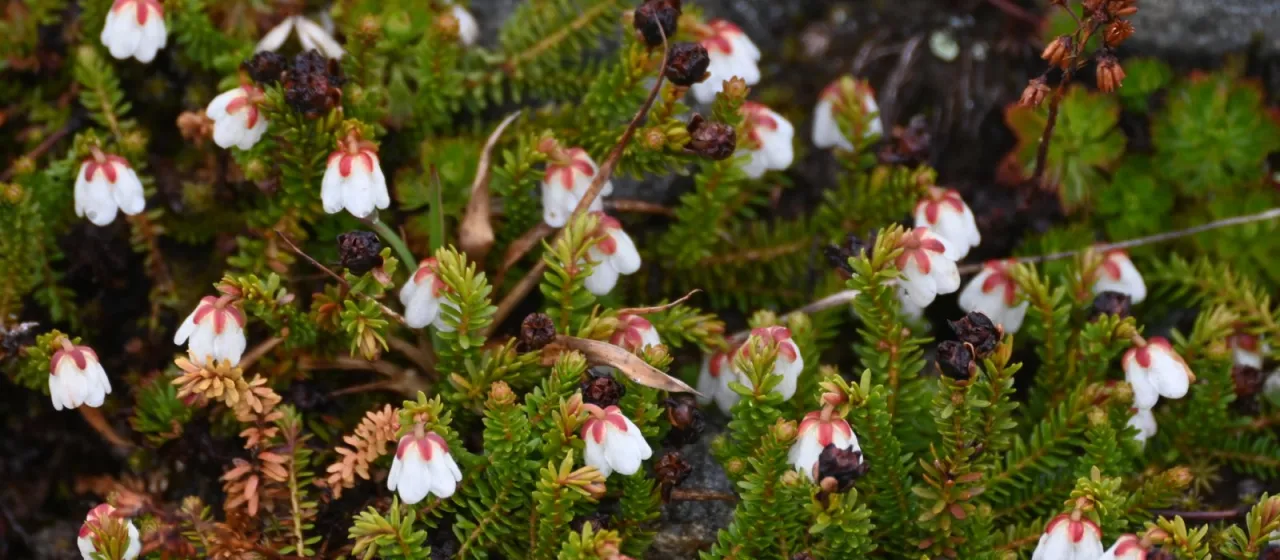
Description
Harrimanella stelleriana, commonly known as Steller's mountain heather, is a prostrate evergreen shrub belonging to the Ericaceae family. This plant is celebrated for its dense, moss-like habit, making it a highly prized specimen for alpine and rock gardens where its unique texture stands out throughout the growing season.
The native habitat of this species covers the arctic and subarctic regions of North America, particularly Alaska and British Columbia, as well as parts of the Russian Far East. It thrives in high-elevation environments, often colonizing acidic, rocky soils in the vicinity of perennial snow patches, which demonstrates its remarkable adaptation to cold-stress environments.
Botanically, it is characterized by its small, overlapping scale-like leaves and delicate, bell-shaped white flowers. The plant's growth habit is compact and slow-spreading, which prevents it from being invasive while requiring several years to form a mature, lush mat. Its root system is delicate and requires proximity to cool, moist, but well-draining substrate.
Agronomically, success in cultivating this species depends on mimicking its natural alpine conditions. It requires acidic soil with excellent drainage and a layer of grit or needle mulch to keep the roots cool. High levels of atmospheric humidity are beneficial, and care should be taken to avoid heat stress during summer months, which is often the primary cause of plant decline.
In terms of agricultural and horticultural use, it is grown exclusively for ornamental purposes. It is rarely found in traditional agriculture but is a staple in botanical collections focusing on Ericaceous plants. Common health issues include fungal root rot triggered by poor drainage or stagnant air, making proper site selection in the garden essential for longevity.
- Requires acidic soil conditions (peat or pine needle mix).
- High tolerance for extreme frost and snow cover.
- Avoids fertilizers with high calcium content.
- Vulnerable to root rot in poorly aerated environments.