
Description
Box-leaf hebe (lat. Hebe buxifolia) is a perennial evergreen shrub belonging to the Plantaginaceae family. It is widely recognized for its dense, compact growth habit and small, leathery leaves that resemble boxwood, making it an excellent choice for formal garden borders and container gardening.
Native to New Zealand, this plant naturally occurs in subalpine and alpine regions. This origin dictates its environmental preferences, favoring cool and moist conditions. In horticultural practice, it is appreciated for its ability to maintain a neat appearance throughout the year with minimal structural intervention.
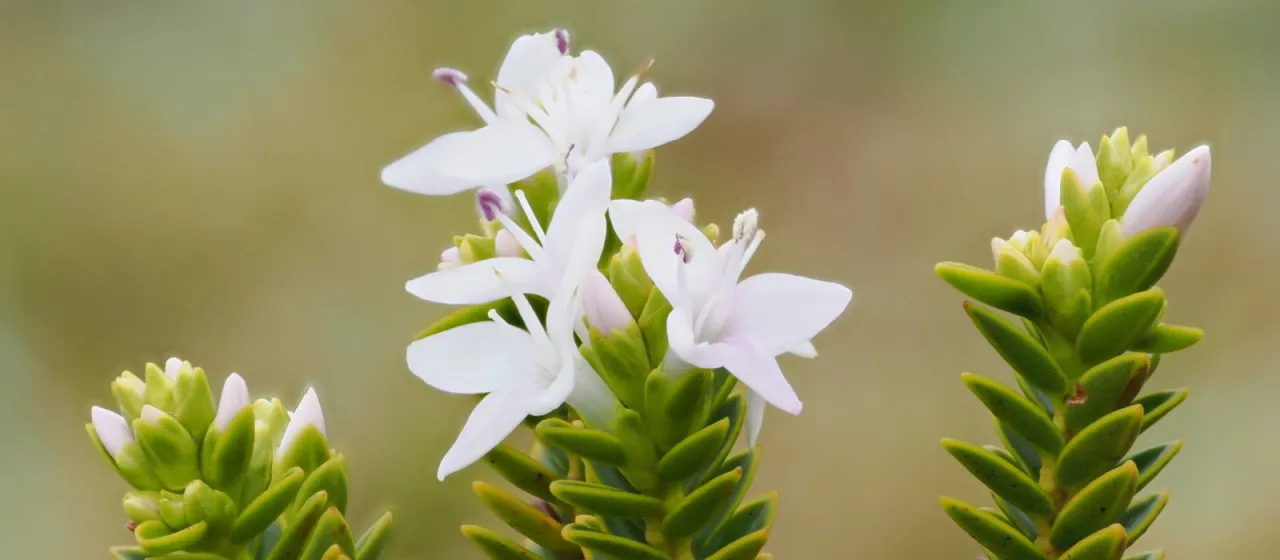
Botanically, the species is characterized by its rigid, glossy dark green foliage arranged in decussate pairs along the stems. During the summer, it produces small, white, spike-like flowers that attract beneficial pollinators. The plant typically reaches a height of 0.5 to 1 meter, maintaining a uniform, rounded shape as it matures.
Successful cultivation requires a location with well-draining soil and partial to full sun exposure. It is crucial to avoid waterlogged conditions, which can lead to root rot. While hardy, the plant benefits from shelter against harsh, drying winter winds, especially in colder temperate regions where frost protection may be necessary.
Pest management and disease prevention are essential for maintaining plant vitality. Common issues include aphids and scale insects, while fungal leaf spots may occur in environments with poor air circulation.
- Ensure excellent drainage in the planting hole
- Apply organic mulch to retain moisture around roots
- Perform light pruning after flowering to maintain shape
- Monitor for pests during the spring growth phase
- Provide winter protection in regions with harsh frosts