
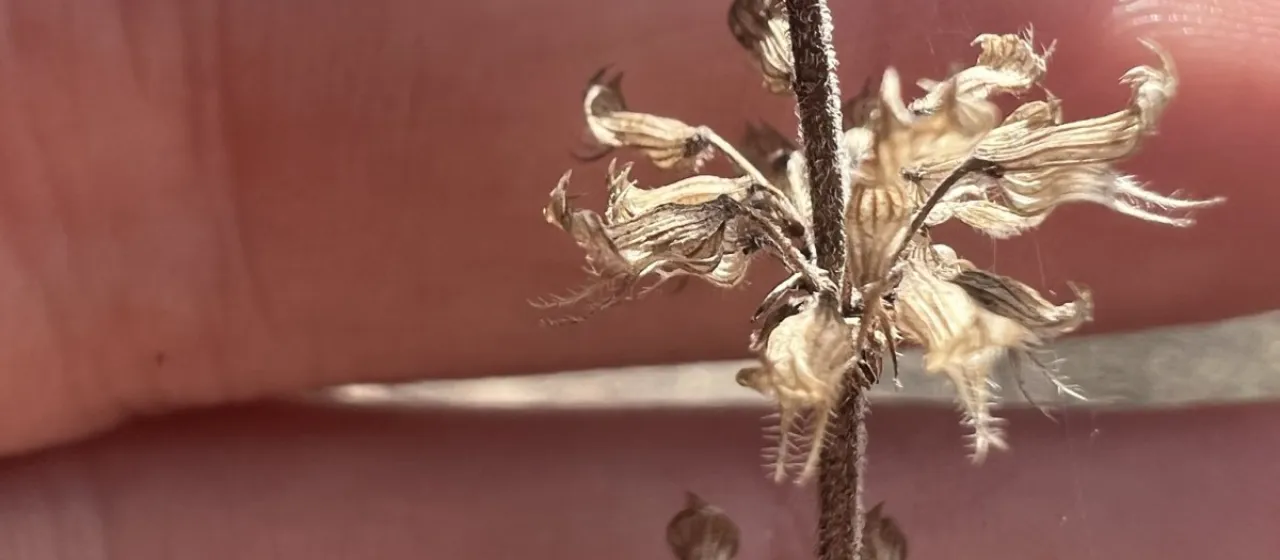
Description
American pennyroyal (Hedeoma pulegioides (L.) Pers.) is an annual herbaceous plant belonging to the Lamiaceae family. It is highly valued for its aromatic properties and high content of essential oils, particularly pulegone, which are extracted for pharmaceutical, culinary, and agricultural uses. The plant is increasingly recognized in sustainable farming as a natural source for insect-repellent compounds.
Native to North America, this species thrives in dry, open habitats such as pastures and fields. Its natural range indicates an adaptation to climates with distinct seasonal temperature changes. In agricultural settings, it requires locations with full sun exposure to maximize the synthesis of essential oils, making it a suitable candidate for specific climate zones that provide sufficient daylight during the growing season.
Botanically, the plant grows up to 40 cm in height, characterized by an upright, branched stem with small, opposite, lanceolate leaves. Its flowers are small and distinctively blue-violet, organized in axillary whorls. The shallow root system requires careful soil management to ensure that the plant does not compete with more aggressive weed species during its early developmental stages.
Successful cultivation requires well-drained, fertile sandy or loamy soils. The agrotechnology involves sowing seeds after the last spring frost once the soil has warmed. Adequate moisture is necessary, but irrigation must be carefully calibrated to avoid waterlogging, as excessive humidity often leads to root fungal infections. Maintenance involves regular weeding and light fertilization to support optimal vegetative growth.
The primary use of American pennyroyal lies in its insecticidal properties, functioning effectively as a natural pest deterrent in integrated pest management (IPM) programs. Furthermore, its essential oil is a commodity in the flavor and fragrance industry. Growers should remain vigilant against common pests such as aphids and fungal issues related to poor soil aeration, which can be mitigated through proper spacing and field rotation practices.