
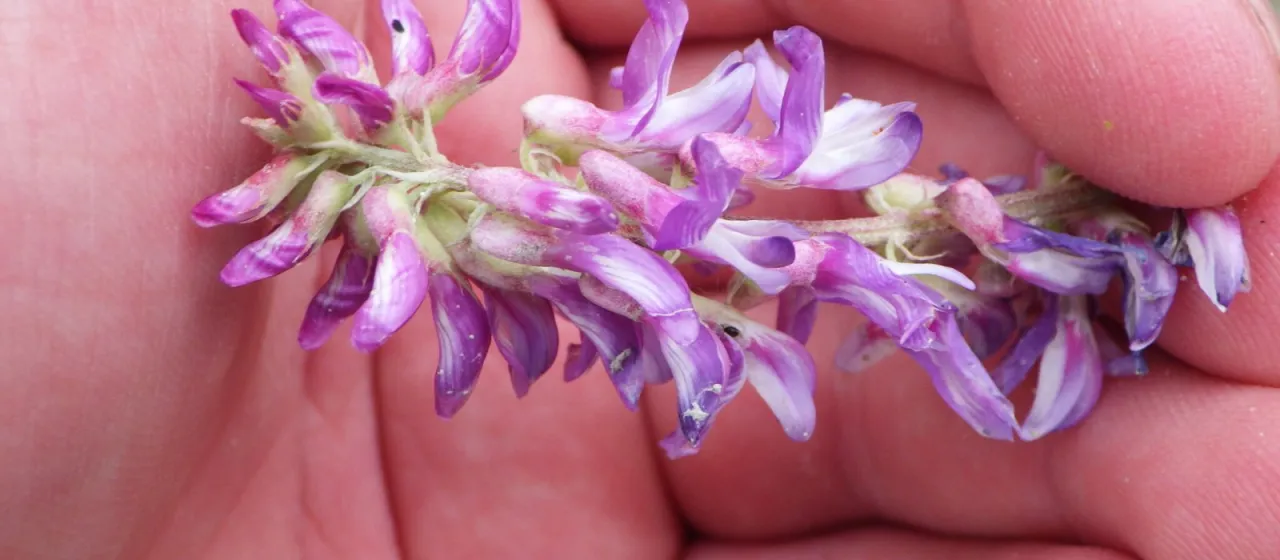
Description
Alpine sweetvetch (Hedysarum alpinum) is a perennial herbaceous plant belonging to the Fabaceae family. It is a remarkably hardy crop known for its extreme resilience, successfully adapting to harsh environmental conditions that would be unsuitable for many traditional agricultural crops, including poor soil and low temperatures.
Its natural range covers alpine and subarctic regions across Eurasia and North America. In agricultural settings, it is highly valued for its ability to thrive in rocky or depleted soils, where it contributes to soil stabilization and provides reliable forage production in areas with difficult terrain or sensitive ecosystems.
The botanical structure of the plant features a robust taproot system, allowing it to withstand drought and poor nutrient availability. The stems are upright, leaves are odd-pinnate, and the inflorescence consists of dense racemes with distinct pink or purple flowers. Its capacity for rapid regeneration after harvesting makes it a sustainable choice for long-term meadows.
Cultivation requirements for this crop are relatively low, as it is well-adapted to natural conditions. Successful establishment requires good drainage, as waterlogging is detrimental to its root system. Seeds often require scarification to improve germination rates, and the crop is typically sown in early spring to take advantage of soil moisture during the establishment phase.
The primary economic use is as high-quality forage for livestock, particularly in northern regions where it provides essential protein and fiber. In addition to its feed value, it is a significant honey plant for bees and has historical importance in herbal medicine. Like many legumes, it is susceptible to specific pests, such as weevils, and occasionally root rot diseases if the drainage is insufficient.