
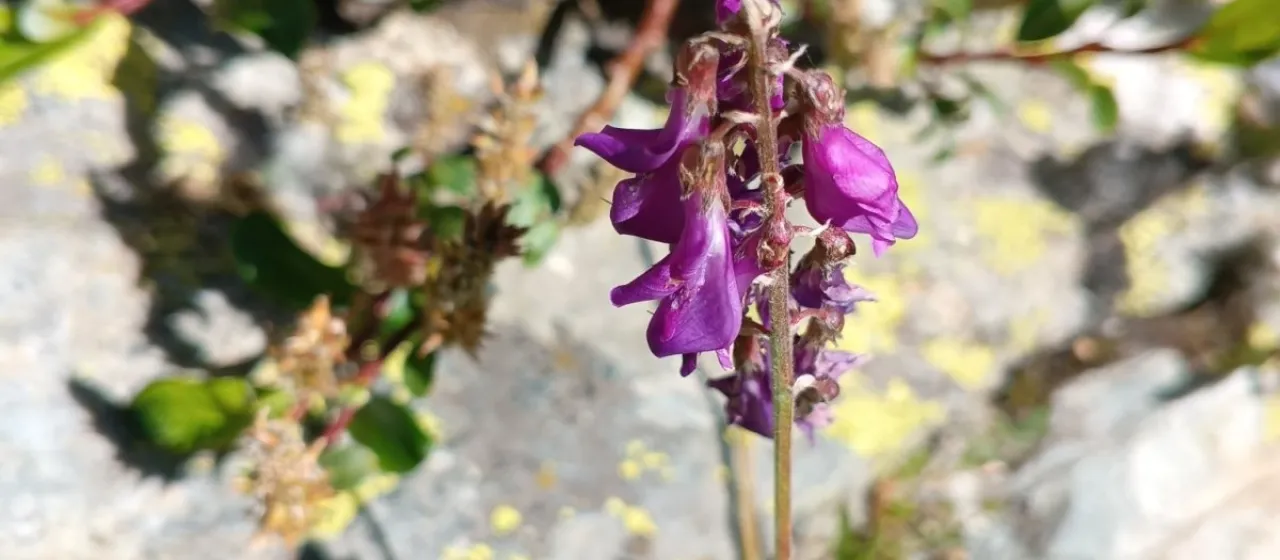
Description
Caucasian sainfoin (lat. Hedysarum caucasicum) is a perennial herbaceous plant belonging to the legume family (Fabaceae). This culture is recognized for its significant role as a forage crop and a source of bioactive compounds, demonstrating high adaptation to alpine environments.
The origin of the species is traced back to the mountainous regions of the Caucasus, where it thrives in subalpine meadows and rocky outcrops. Its natural range reflects a high degree of resilience to harsh climates, including temperature fluctuations and poor soil structures.
Botanically, the plant features a robust taproot system that ensures stability and moisture absorption in steep terrain. The foliage is pinnate, typical for the Fabaceae family, while the inflorescences are dense racemes of vivid purple or pink flowers. The pods are jointed, segmenting at maturity to facilitate seed dispersal.
Agronomic requirements center on soil texture and drainage. The plant prefers well-drained, calcareous, or stony soils and is intolerant of waterlogged conditions. It exhibits excellent winter hardiness and drought tolerance, making it suitable for sustainable land management in mountainous agricultural regions.
The main areas of economic use for Caucasian sainfoin include:
- Forage production, providing high-protein feed for livestock.
- Medicinal application due to its adaptogenic and restorative properties.
- Soil conservation efforts to prevent erosion on hilly terrains.
- Apiculture, acting as a valuable source of nectar for pollinators.