
Description
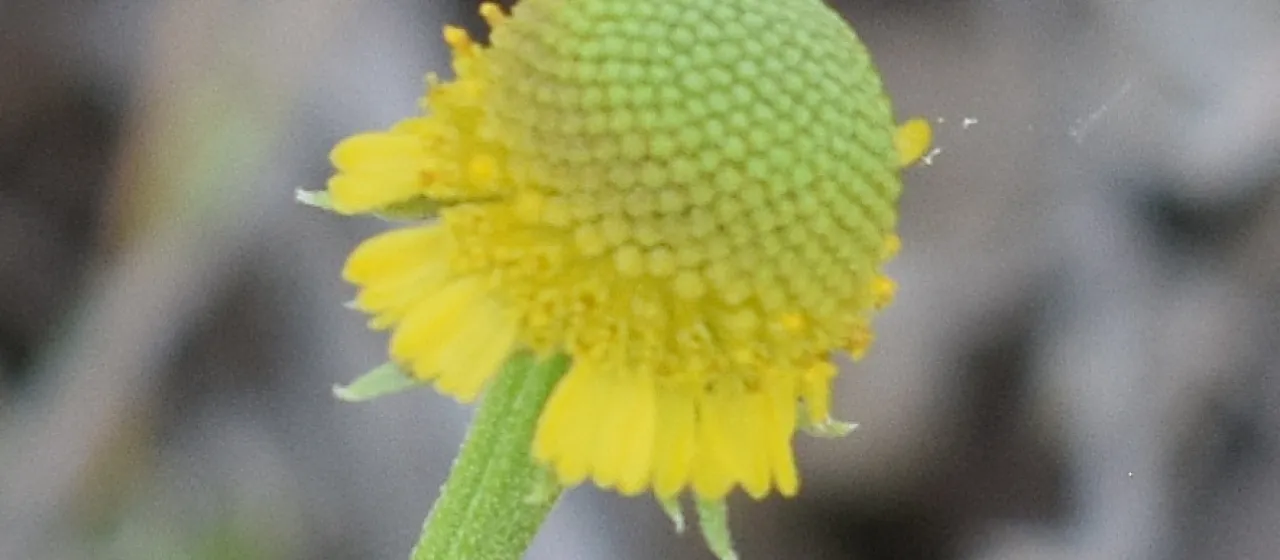
Helenium puberulum, commonly known as Rosilla, is a herbaceous perennial plant belonging to the Asteraceae family. It is distinct among its genus for its unique inflorescence, which features a prominent, ball-shaped central disc, making it a standout selection for botanical collections and specialized garden beds.
The plant originates from the western regions of North America, specifically California. Its natural habitat includes moist lowland areas, meadows, and banks of streams. Understanding this native environment is crucial for gardeners aiming to provide the specific moisture levels required for healthy plant development.
Botanically, the plant grows as an upright herb reaching heights of 60 to 120 centimeters. The stems are characterized by a soft, fine pubescence, which is the origin of the specific epithet puberulum. The leaves are lanceolate, and the flowers are notable for their rounded, protruding central heads, which are often brownish or yellowish in appearance.
Cultural requirements involve maintaining consistent soil moisture. While it thrives in fertile, well-draining soils, it performs best in sunny locations where it can access moderate water levels. Mulching is highly recommended in warmer climates to protect the roots from extreme heat and to retain necessary ground moisture during the active growing season.
The primary use of Helenium puberulum is ornamental, particularly in naturalistic landscape designs and waterside plantings. It is relatively resilient, but growers should watch for common pests such as aphids or spider mites. Typical disease issues are usually related to fungal infections caused by poor air circulation or excessive overhead watering in humid conditions.