
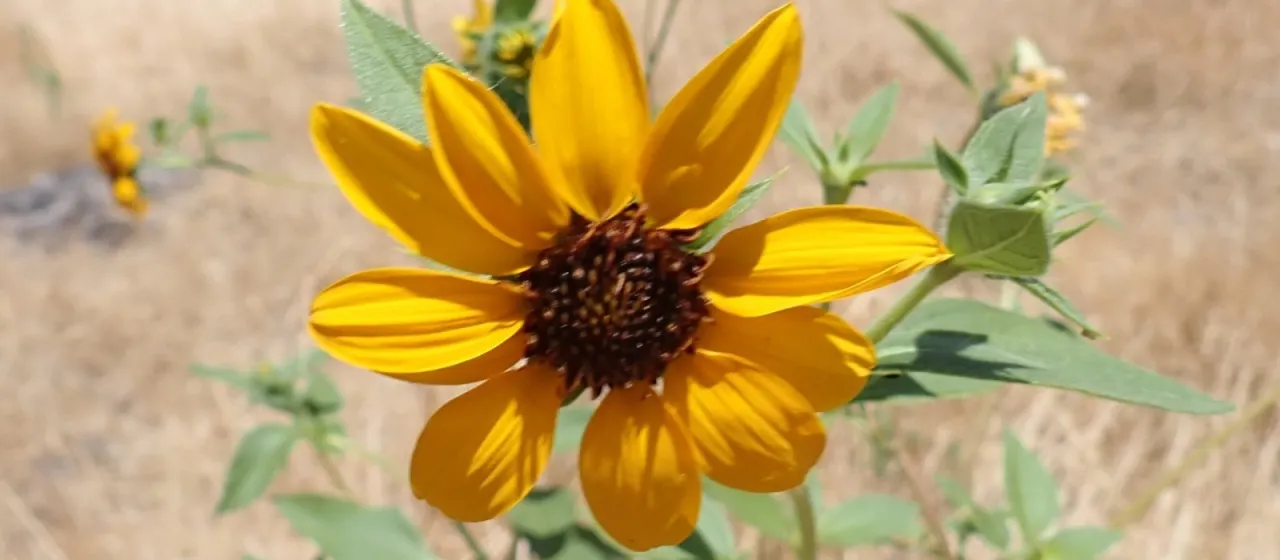
Description
Bolander's sunflower (Helianthus bolanderi) is an annual herbaceous plant belonging to the Asteraceae family. Known primarily as a wild relative of the common commercial sunflower, this species is noted for its ability to thrive in harsh environments. It plays a significant role in modern agronomy as a genetic reservoir for enhancing the climate resilience of cultivated sunflower varieties.
The native range of Helianthus bolanderi encompasses regions in California and Oregon, USA. It is characteristically found in open habitats, including volcanic soils, dry lake beds, and disturbed areas where water availability is limited during the growing season. This geographic adaptation defines its status as a highly xerophytic plant species.
Botanically, the plant grows up to 1.5 meters tall with a firm, often branched stem and coarse, lance-shaped leaves covered in short, stiff hairs. The flower heads consist of vibrant yellow ray florets and dark-colored disc florets, which are essential for pollination and seed production. The overall structure is optimized for survival in high-light, low-moisture environments.
Cultivation requirements for Helianthus bolanderi focus on full sun exposure and excellent soil drainage. It performs best in nutrient-poor but well-aerated substrates, avoiding waterlogged conditions which are detrimental to its root health. Agronomic practices should prioritize minimal irrigation and protection from competition by invasive weed species during the seedling stage.
The primary agricultural utility of this plant is found in breeding programs.
- Utilizing drought-tolerance genes for crop improvement.
- Developing hybrids resistant to biotic stressors.
- Researching adaptive mechanisms in Asteraceae.
- Potential for land restoration in dry regions.
The species is susceptible to typical sunflower pathogens such as powdery mildew and rust, which may proliferate under high humidity conditions. Common insect pests include aphids and beetles that feed on foliage or developing seeds. However, the plant's robust nature allows it to recover well from minor pest infestations under optimal ecological conditions.