
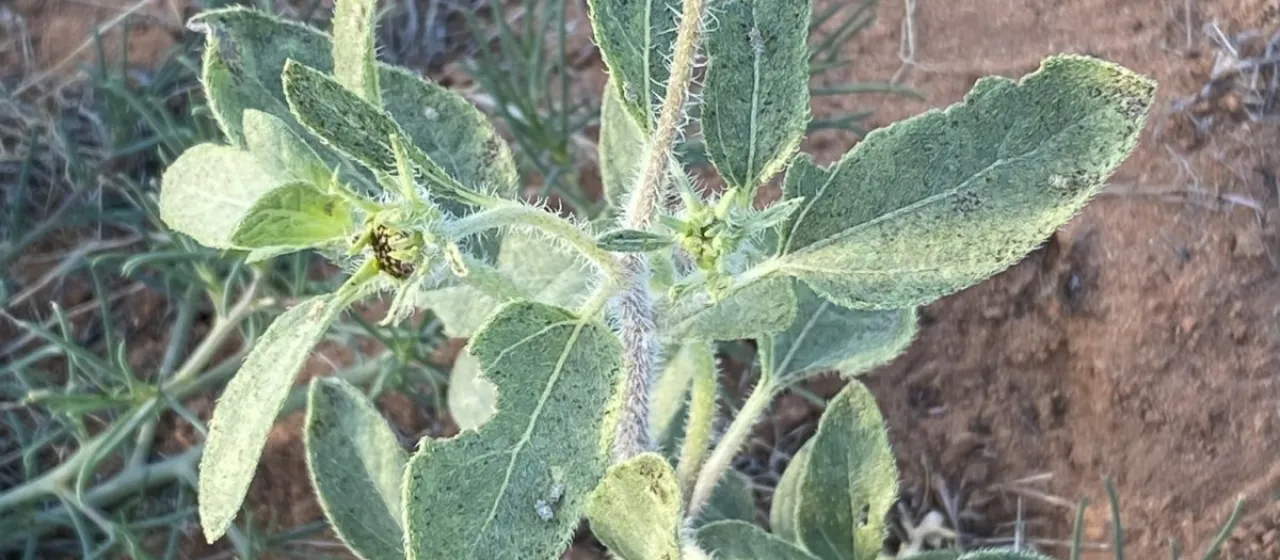
Description
Desert sunflower (Helianthus deserticola) is a unique botanical species belonging to the Asteraceae family. Known for its extreme resilience, this plant has evolved to thrive in the harshest desert environments, serving as a critical subject for agricultural research and plant genetics.
The plant is native to the arid desert regions of the southwestern United States, primarily in Arizona and California. It is specifically adapted to sandy, nutrient-poor substrates, demonstrating an extraordinary ability to survive in environments characterized by long periods of intense heat and minimal annual rainfall.
Botanically, Helianthus deserticola is distinguished by its specialized root system and xeromorphic leaf structures. The presence of dense trichomes (hairs) on the leaves significantly reduces water loss through transpiration, while the plant’s overall morphology is optimized for water conservation.
In terms of agricultural significance, this species is not cultivated for commercial oil production but is highly prized in modern plant breeding programs. Scientists leverage its genetic profile to introduce traits of extreme drought resistance into commercial sunflower lines, which is essential for ensuring food security under changing global climate conditions.
The cultivation of Helianthus deserticola is primarily restricted to experimental greenhouse and laboratory settings. Like most wild relatives of commercial crops, it can be susceptible to specific pests and pathogens if exposed to non-native, more humid environments where its natural defenses are overwhelmed by fungal diseases.