
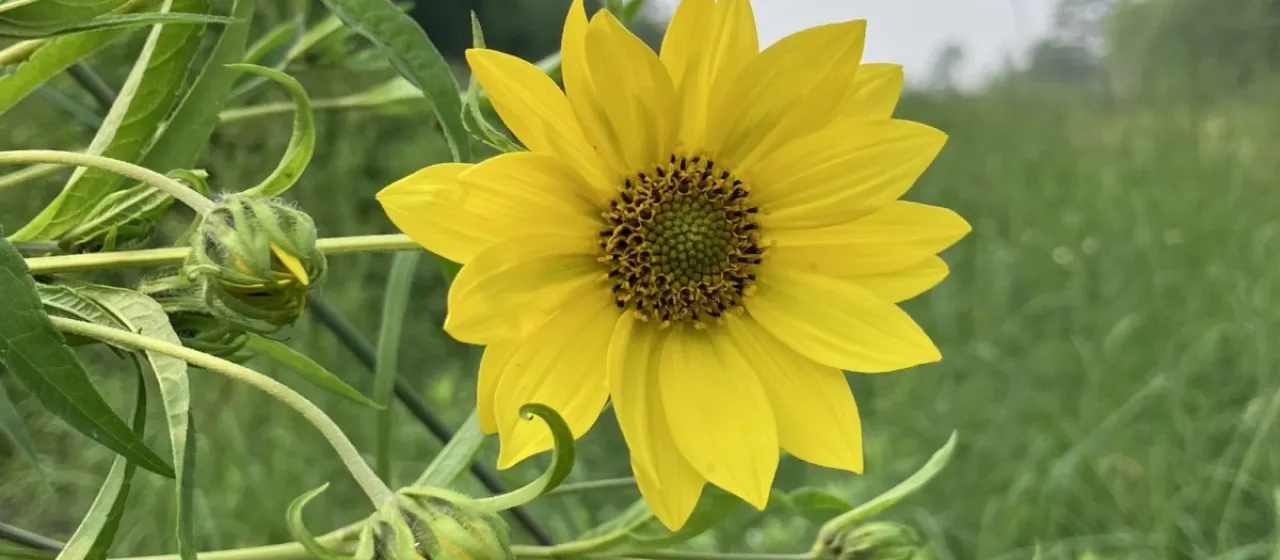
Description
The Giant sunflower (Helianthus giganteus) is a robust perennial herbaceous plant belonging to the Asteraceae family. Unlike the common annual sunflower, this species is characterized by its creeping rhizomes, which allow the plant to establish itself in a permanent location and survive through winter dormancy, returning annually with renewed vigor.
Native to North America, the plant naturally thrives in moist to wet habitats, including riparian zones, marshes, and damp meadows. Because of its ecological preferences, it has been introduced to various temperate regions worldwide, where it is valued for its ability to adapt to difficult, wet soil conditions where other sunflower species might struggle.
Botanically, Helianthus giganteus produces tall, erect stems reaching heights of 2 to 3 meters. The leaves are typically lance-shaped and rough-textured. The inflorescences consist of small, showy yellow composite heads grouped in a corymb-like arrangement at the top of the stem, providing a prolonged flowering period from late summer through autumn.
Regarding cultivation, this crop demands fertile, moisture-retentive soils and a position with full sun to partial shade. Irrigation is a critical factor; the plant is not drought-tolerant and requires consistent moisture to maintain its vertical structure and prevent wilting. Propagation is primarily achieved through rhizome division in early spring, ensuring the consistency of the stand.
Economically, the giant sunflower serves multiple purposes. It is widely used in landscape architecture to provide vertical interest in large garden beds or as a naturalistic screen. It is also highly regarded by beekeepers as a late-season nectar source, filling the gap in available forage. Research into its biomass production potential continues to explore its utility for industrial fiber and as a perennial forage alternative.
- Hardy perennial root system.
- High water requirements for optimal growth.
- Excellent resistance to common sunflower diseases.
- Valuable late-season forage for pollinators.