
Description
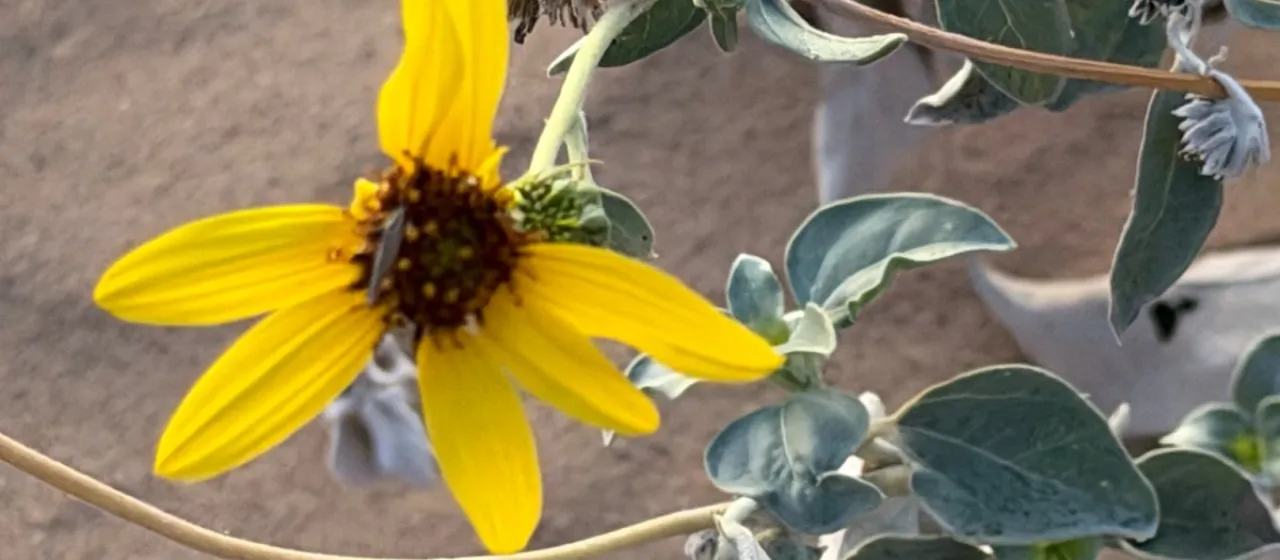
Snow sunflower (Helianthus niveus) is a distinct species belonging to the Asteraceae family. It is a wild relative of the common agricultural sunflower, distinguished by its striking silvery-white pubescence that covers its stems and leaves, providing a unique aesthetic and biological advantage in arid environments.
The native distribution of this species spans across the southwestern United States, particularly within Arizona and California, extending into northern Mexico. It is specifically adapted to desert and semi-desert ecosystems, where environmental stress, such as intense heat and limited water availability, is a constant factor.
Botanically, the plant presents as a branched herb with distinct yellow flower heads. The dense coat of trichomes (hairs) on its foliage serves a critical physiological function by increasing albedo, reducing water loss through transpiration, and protecting the plant from intense solar radiation in high-desert climates.
Agricultural management of this species requires well-drained, sandy soils that mimic its natural habitat. It is highly intolerant of waterlogged conditions and heavy, clay-rich soils. Successful cultivation relies on providing full sun exposure and precise irrigation, ensuring the root system does not suffer from anaerobic stress caused by excessive humidity.
In terms of хозяйственного usage, Helianthus niveus serves as a vital genetic resource for plant breeding. Due to its superior drought tolerance and physiological resilience, it is often studied as a source of beneficial traits for developing climate-resilient hybrids of commercial sunflowers. It also finds niche applications in xeriscaping and ornamental garden design.
- Drought tolerance
- Silvery leaf pubescence
- Desert-adapted morphology
- Genetic potential for breeding
- High heat resistance