
Description
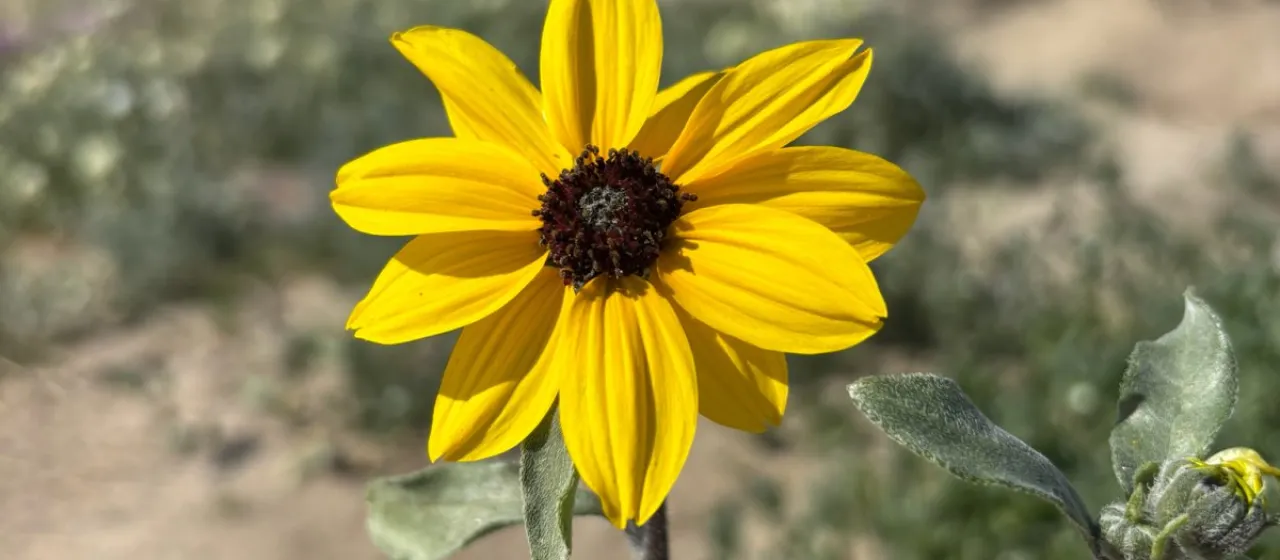
The Prairie sunflower (Helianthus petiolaris) is an annual herbaceous plant belonging to the Asteraceae family. As a wild relative of the commercial sunflower, it is a significant species in botanical studies and agricultural research, valued primarily for its robust genetic profile and ability to thrive in harsh environments.
Native to North America, this species is commonly found in prairies, sandy plains, and disturbed habitats. Its natural range demonstrates a remarkable capacity for colonization, allowing the plant to establish itself in various ecological zones, often behaving as a pioneer species in sandy or nutrient-poor soils.
From a botanical standpoint, Helianthus petiolaris features a slender, often reddish stem that can grow up to 1.2 meters. The leaves are distinctively petiolate, which gives the species its specific name. The plant produces small, daisy-like flower heads with yellow rays and dark centers, facilitating efficient insect-mediated cross-pollination.
The species is exceptionally well-adapted to arid climates. It thrives under high solar radiation and low moisture levels, making it highly drought-tolerant. In agricultural settings, it is often managed as a competitive weed, but its inherent hardiness makes it a subject of interest for developing resilient cultivars that can survive climate change-induced stress.
- Superior drought and heat tolerance.
- Strong resistance to major sunflower diseases.
- Adaptability to nutrient-poor sandy soils.
- Valuable genetic resource for crop improvement.
The primary agricultural utility of the Prairie sunflower lies in its role in breeding programs. Scientists leverage its genetic diversity to introduce traits such as resistance to broomrape (Orobanche cumana) and various fungal pathogens into modern oilseed sunflower hybrids, thereby enhancing overall crop yield stability and protecting against biotic threats.