Italian everlasting
Helichrysum italicum (Roth) Gussone
Description
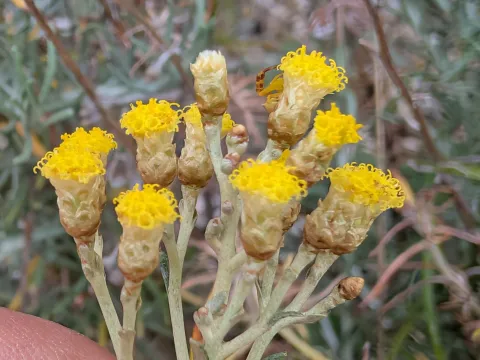
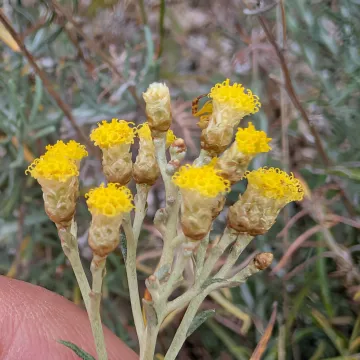
The Italian everlasting (Helichrysum italicum) is a perennial subshrub belonging to the Asteraceae family. Famous for its curry-like aroma, it is widely cultivated for the essential oil extracted from its aromatic foliage and bright yellow flower heads.
Native to the Mediterranean basin, the plant naturally thrives in rocky, arid, and sunny habitats. Its cultivation is primarily concentrated in Italy, France, and the Balkans, where the climate supports its growth without the risk of severe winter frost damage.
Botanically, the plant is characterized by its narrow, linear leaves covered in a silvery-grey pubescence. This unique structure allows the plant to thrive in nutrient-poor, well-draining soils by minimizing water loss, making it an excellent candidate for sustainable agriculture in dry regions.
Agricultural success depends on providing full sun exposure and avoiding waterlogged conditions. The soil should be slightly alkaline or neutral, with excellent drainage to prevent root rot. Maintenance involves pruning the plants after the flowering season to maintain their compact shape and promote healthy vegetative growth for the following year.
The primary economic value of this crop lies in its essential oil, which is highly sought after in the cosmetic and skincare industries for its healing properties. Furthermore, the plant is valued as an ornamental dry flower in the floriculture sector, remaining attractive long after it is harvested.
- High drought tolerance once established.
- Preference for poor, gravelly soils.
- Excellent performance in xeriscaping and dry farming.
- Sustainable production due to low fertilizer requirements.
The most common pests and diseases are associated with moisture management. While the plant is generally resistant, root decay remains a risk in poorly aerated soils. Monitoring for fungal issues during periods of excessive rainfall is essential for maintaining a healthy and productive crop yield.
Photo gallery