
Description
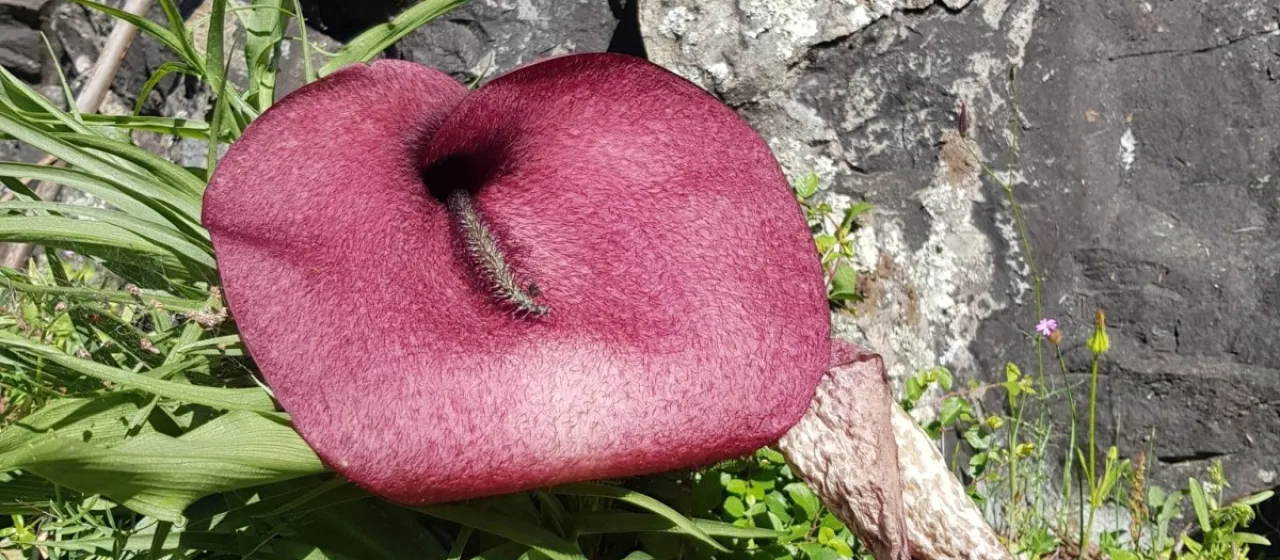
Helicodiceros muscivorus, widely known as the dead horse lily, is a fascinating perennial plant belonging to the Araceae family. As the sole species in its genus, it has garnered significant attention due to its peculiar pollination strategy: the plant emits a strong scent of rotting meat to attract carrion-visiting flies, which serve as its primary pollinators.
The plant is native to the western Mediterranean region, specifically inhabiting Corsica, Sardinia, and the Balearic Islands. While it is not a traditional agricultural crop, it occupies a niche role in specialized horticulture, particularly among collectors of rare aroids and botanical research institutions interested in thermogenic plants.
Botanically, the species is defined by its massive tuber and a large, deeply divided leaf. Its most striking feature is the inflorescence, which consists of a spadix and a large, furry spathe resembling raw meat. This structure is not only visually impressive but also biologically advanced, capable of generating heat to enhance the dispersal of its distinctive odor.
Cultivation requires specific environmental conditions that mirror its Mediterranean habitat. Essential agricultural practices include the use of extremely well-draining soil mixtures to prevent tuber rot. The plant thrives in positions that provide plenty of light, but it should be protected from intense mid-day heat if grown in confined greenhouse environments.
- Provide excellent soil drainage.
- Maintain moderate watering schedules.
- Avoid over-fertilization to prevent soft growth.
- Monitor for aphids and spider mites during dormant stages.
In terms of agricultural threats, the plant is primarily susceptible to fungal diseases such as Erwinia or various root rots triggered by saturated soil. Pests like aphids can occasionally settle on the foliage during the growth phase. Successful management involves maintaining a consistent microclimate and ensuring that the substrate dries out sufficiently between waterings.