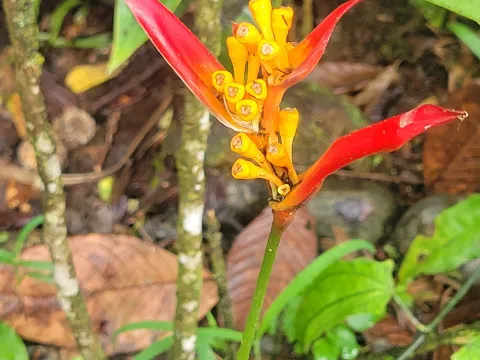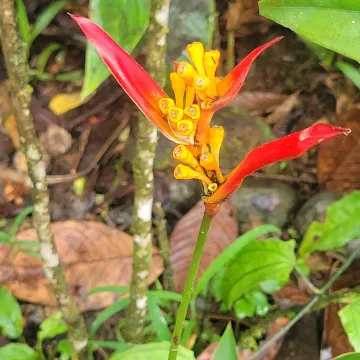
Heliconia cannoidea
Heliconia cannoidea
Description
Heliconia cannoidea is a perennial herbaceous plant belonging to the Heliconiaceae family. It is distinct for its Canna-like appearance, which gives the species its botanical name, yet it is highly prized for its unique, colorful bracts that form striking, elongated inflorescences, making it a prominent feature in tropical landscapes.
Originating from the tropical rainforests of South and Central America, this plant is native to regions with consistently high humidity and warm temperatures. Because of its tropical origins, the plant has evolved to thrive in environments with ample rainfall and diffused sunlight, which dictates its narrow range for outdoor cultivation.
Botanically, this species is characterized by robust rhizomes and erect stems that can reach significant heights. The leaves are broad and lanceolate, typical of many Heliconia species. The inflorescences emerge from the center of the foliage, displaying vibrant colors that serve to attract specific tropical birds for pollination, which is a hallmark of the family.
In terms of agronomy, the plant requires nutrient-rich, well-draining soil with a slightly acidic pH. Effective cultivation depends on maintaining high ambient humidity and avoiding extreme temperature drops. In non-tropical regions, it is almost exclusively grown in greenhouses or botanical conservatory settings where environmental factors can be tightly controlled.
The primary commercial application for Heliconia cannoidea is as a decorative flower in the floral industry. Its stems are highly valued for use in exotic floral arrangements due to their durability and long vase life. Additionally, it serves as an ornamental specimen in landscaping for tropical resorts and conservatories where the climate allows for its healthy development.
- Maintain high soil moisture without waterlogging
- Ensure bright, filtered sunlight
- Regular fertilization during the growing season
- Monitor for common pests like spider mites and mealybugs
Photo gallery