
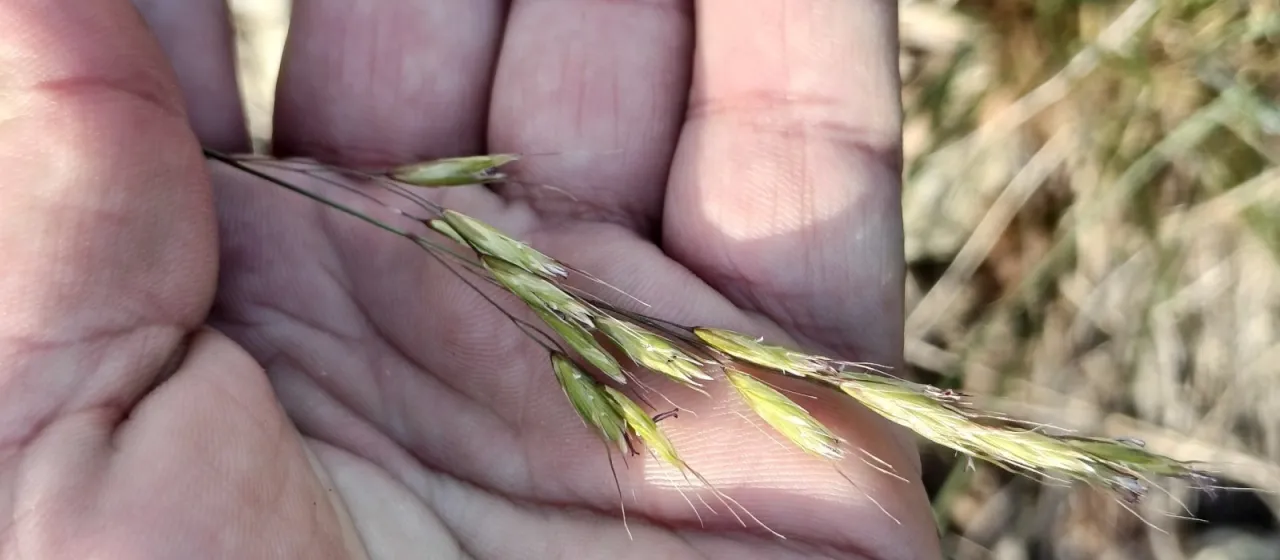
Description
Desert oat grass (Helictotrichon desertorum) is a resilient perennial grass belonging to the Poaceae family. Known for its ability to thrive in harsh environments, it serves as a critical component in the plant communities of arid and semi-arid steppes throughout Eurasia.
This species naturally occupies rocky slopes and dry, nutrient-poor soil types. Its evolutionary adaptation to extreme environmental stress makes it a subject of interest for sustainable agriculture, particularly in regions prone to desertification or lacking irrigation resources.
Botanically, Helictotrichon desertorum is characterized by dense tufts and deep, fibrous root systems that anchor the plant securely while accessing moisture from lower soil horizons. The leaves are typically narrow and rolled, which reduces transpiration, ensuring survival during prolonged droughts.
In terms of agronomy, the grass is highly undemanding. It prefers well-drained soils and can withstand high levels of salinity and poor nutrient profiles. No intensive management is required, as the plant possesses natural resistance to most common grass diseases and pests, making it a cost-effective choice for reclamation projects.
The primary agricultural application is as a high-quality forage crop for livestock. It is prized for its longevity, durability under heavy grazing pressure, and rapid recovery rate. By maintaining its nutritional value well into the late season, it provides a stable feed source for ruminants in demanding climatic conditions.
- Excellent drought and frost tolerance.
- Soil erosion control properties.
- High palatability for livestock throughout the season.
- Low requirement for fertilizers and chemical inputs.