
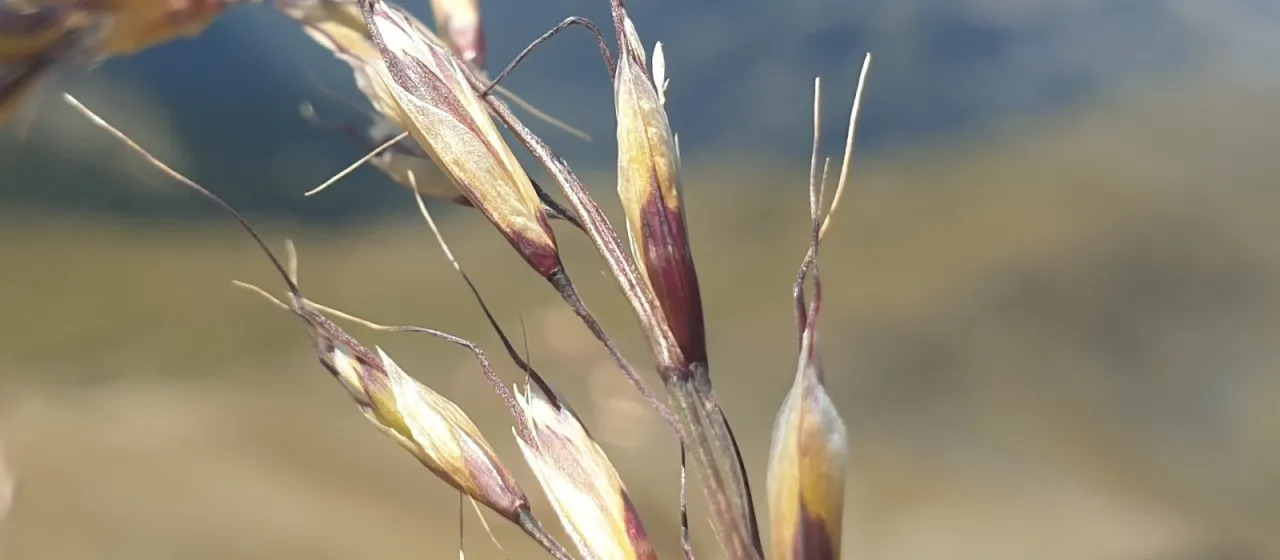
Description
Helictotrichon sedenense is a perennial grass species belonging to the Poaceae family. While primarily recognized as a wild grass, it holds significant interest in agricultural research as a hardy forage crop suitable for marginal lands and mountainous agricultural zones where traditional cereal crops may struggle to thrive.
The origin of this species is linked to the European mountainous regions, particularly the limestone formations of the Alps and similar elevations. Its distribution area is characterized by rocky substrates and thin soils, which have shaped the plant's unique biological ability to extract nutrients efficiently and withstand harsh climatic shifts.
Botanically, the plant grows in dense tufts, which is a structural adaptation for stability on slopes. Its leaves are narrow, stiff, and serrated, designed to minimize water loss. The inflorescence is a panicle that produces resilient seeds, ensuring propagation even under challenging environmental conditions. The plant's deep root system provides excellent soil binding properties.
In terms of agricultural requirements, this crop thrives in well-drained, alkaline to neutral soils. It shows remarkable tolerance to drought and cold stress. Agronomic management is relatively low-input, requiring periodic monitoring to ensure the stand remains competitive against invasive weeds. Its ability to tolerate low soil fertility makes it an excellent candidate for sustainable pasture improvement.
Typical plant health challenges include fungal infections, particularly rust and mildew, which can manifest if air circulation is poor or humidity levels remain high for extended periods. Common insect pests include grass-feeding larvae and stem-boring flies. Effective management relies on proper drainage systems and selective mowing schedules that allow the plant to harden off before winter dormancy.