
Description
Heliotropium bacciferum is a perennial herbaceous plant belonging to the Boraginaceae family. This species is recognized as a hardy subshrub, highly specialized for survival in harsh environments. It is a significant subject of interest in regions focused on arid-land agriculture and xeriscaping.
Originating from the arid zones of the Middle East and North Africa, this plant has adapted to survive in sandy soils and rocky desert environments. Its natural range is characterized by extreme temperature fluctuations and very low annual precipitation, where the plant plays a crucial role in stabilizing sandy substrates and providing local biodiversity.
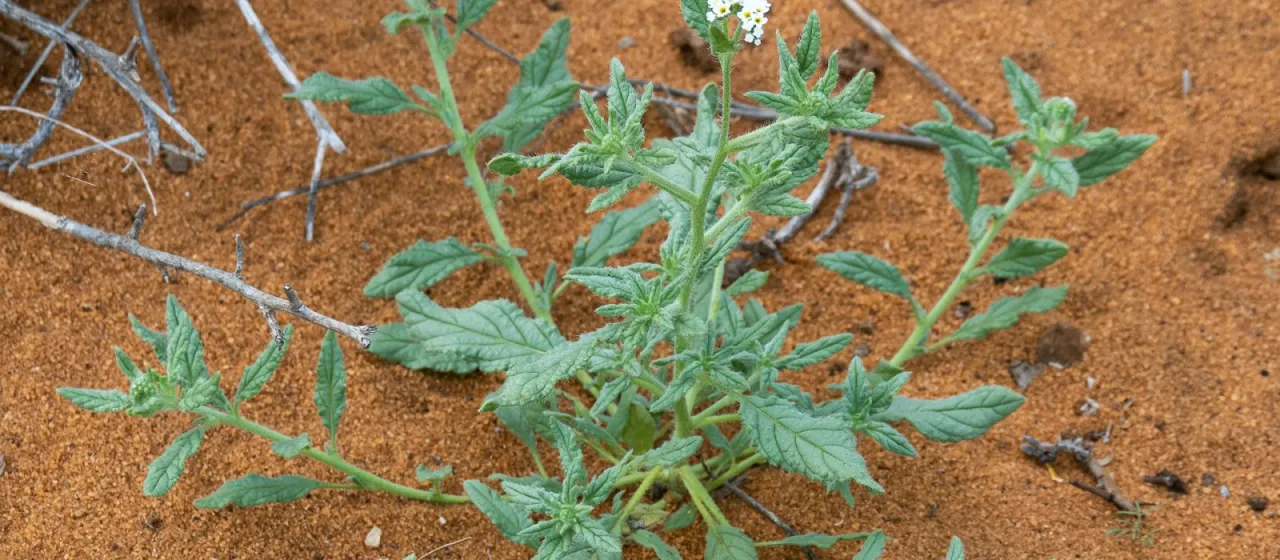
Botanically, the plant is distinguished by its branched, hairy stems and lanceolate leaves. The most striking morphological feature is its fruit, which develops into a fleshy, berry-like structure, setting it apart from many other species in the Heliotropium genus. Small, tubular flowers are arranged in characteristic scorpioid cymes, providing a steady bloom during the growing season.
Agricultural requirements for Heliotropium bacciferum center on well-draining, sandy-loam soils and full sun exposure. It is highly intolerant of waterlogging, which can cause rapid root decay. Standard agrotechnics involve minimal irrigation schedules and careful selection of planting sites to ensure that drainage pathways are not obstructed.
The plant is primarily utilized in traditional medicine and specialized phytochemical research due to its secondary metabolite profile. While generally resilient, the crop can be susceptible to common pests such as aphids or spider mites, especially under stress conditions. Effective management requires maintaining optimal soil structure and preventing the onset of fungal diseases common in drought-resistant species grown under irrigation.