
Description
The Seaside heliotrope (Heliotropium curassavicum) is a perennial herbaceous plant belonging to the Boraginaceae family. It is widely recognized as a highly specialized halophyte, an organism that thrives in environments with high concentrations of salt that would be lethal to most other crops.
Originating from the Americas, the species has a vast native range extending across tropical and subtropical coastlines worldwide. It naturally occupies saline marshes, sandy beaches, and alkali flats, demonstrating a remarkable ability to survive in environments characterized by physiological drought.
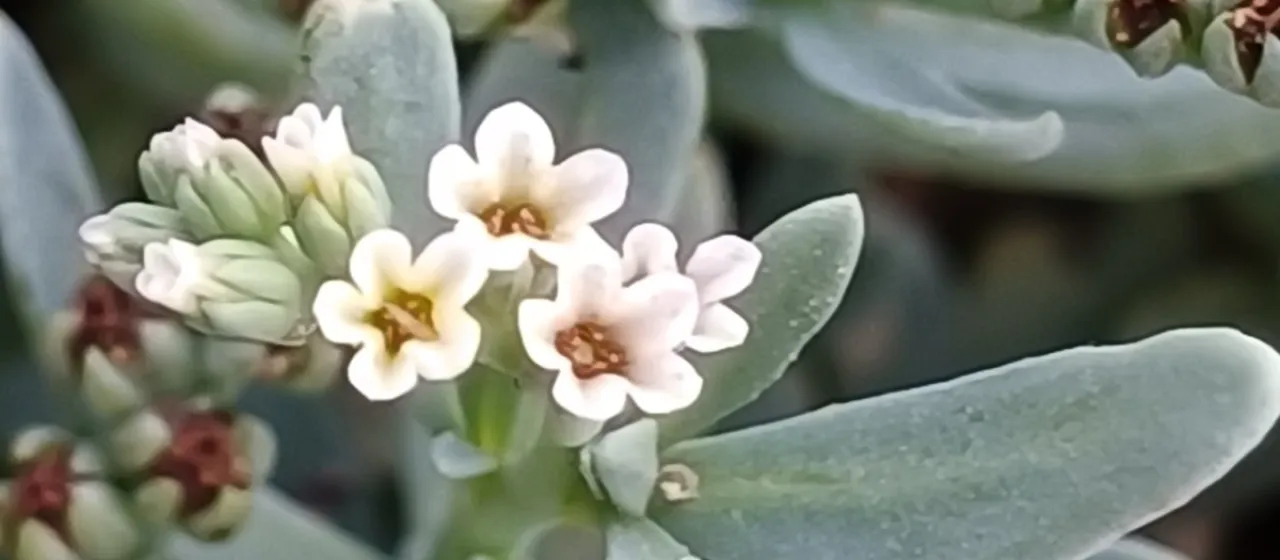
Botanically, the plant is distinguished by its succulent, glaucous foliage and prostrate growth habit. The leaves are typically thick and fleshy to store water, while the small, white, fragrant flowers are arranged in curved, one-sided spikes (scorpioid cymes), which is a key identifying trait of the genus.
Agricultural management of this species requires full sun exposure and well-draining soil. While it is naturally adapted to salt, in a controlled agricultural or landscape setting, it requires careful soil preparation to manage salt levels and prevent waterlogging, which can cause root decay in cooler temperatures.
- Requires high solar radiation.
- Thrives in saline-alkali soil conditions.
- Demonstrates high drought tolerance.
In terms of agricultural and environmental use, this species is valuable for soil stabilization and phytoremediation projects in arid coastal regions. Researchers are also investigating its secondary metabolites, although its usage is mainly focused on environmental restoration and coastal landscaping rather than commercial food production.