
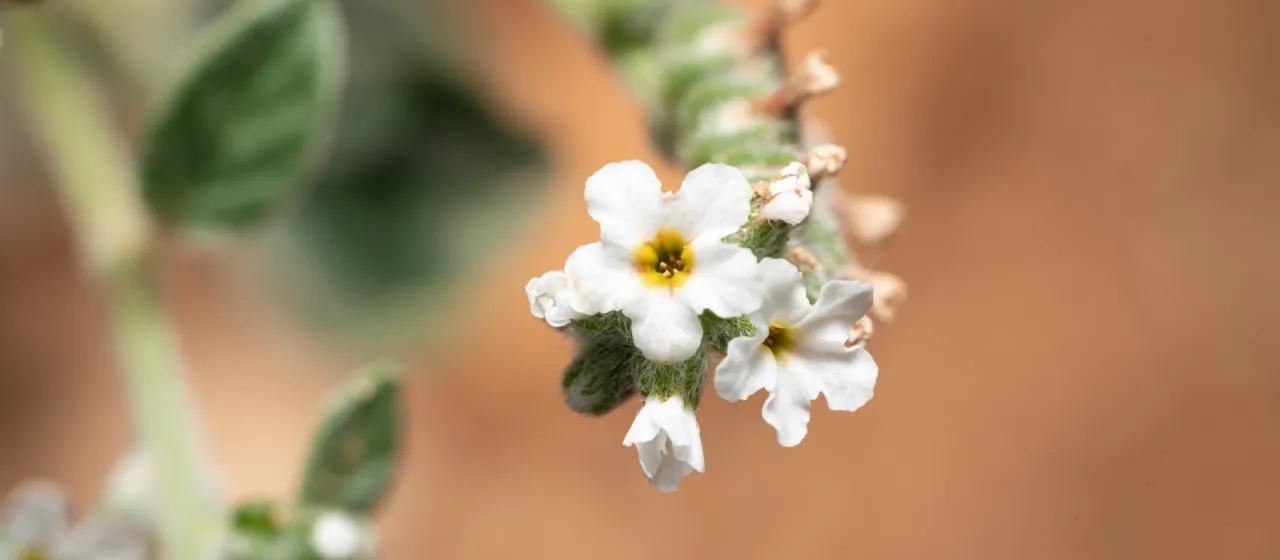
Description
Heliotropium dolosum is a perennial herbaceous plant classified within the Boraginaceae family. In agronomic contexts, it is recognized for its significant adaptability to challenging environmental conditions, often acting as a resilient species that occupies disturbed soils and marginal agricultural lands within its native ecological zones.
The species originates from semi-arid regions and is commonly found across parts of Central Asia and similar dry climates. Its habitat is characterized by high levels of solar radiation and poor, often rocky or sandy soils where other plant species struggle to establish, highlighting its evolutionary advantage in drought-prone environments.
Botanically, this plant displays a well-developed taproot system, which serves as a primary adaptation for water uptake in arid conditions. The stems are typically branching and pubescent, providing protection against transpiration loss. The leaves and flowers demonstrate clear heliotropism, a biological mechanism allowing the plant to track solar orientation throughout the day.
Regarding cultivation and soil requirements, Heliotropium dolosum thrives in well-drained substrates with high mineral content. It does not require intensive fertilization, as it is adapted to nutrient-poor environments. Agronomic management of this plant usually focuses on limiting its growth in crop fields through mechanical tillage, as it can compete with agricultural crops for subsoil moisture.
From an ecological and agricultural management perspective, the plant faces pressures from various insect pests, including leaf-feeding beetles, and can suffer from fungal infections if soil moisture remains excessively high for prolonged periods. Controlling the population density is essential in fields where this species may hinder the yields of commercial drought-resistant crops.