
Description
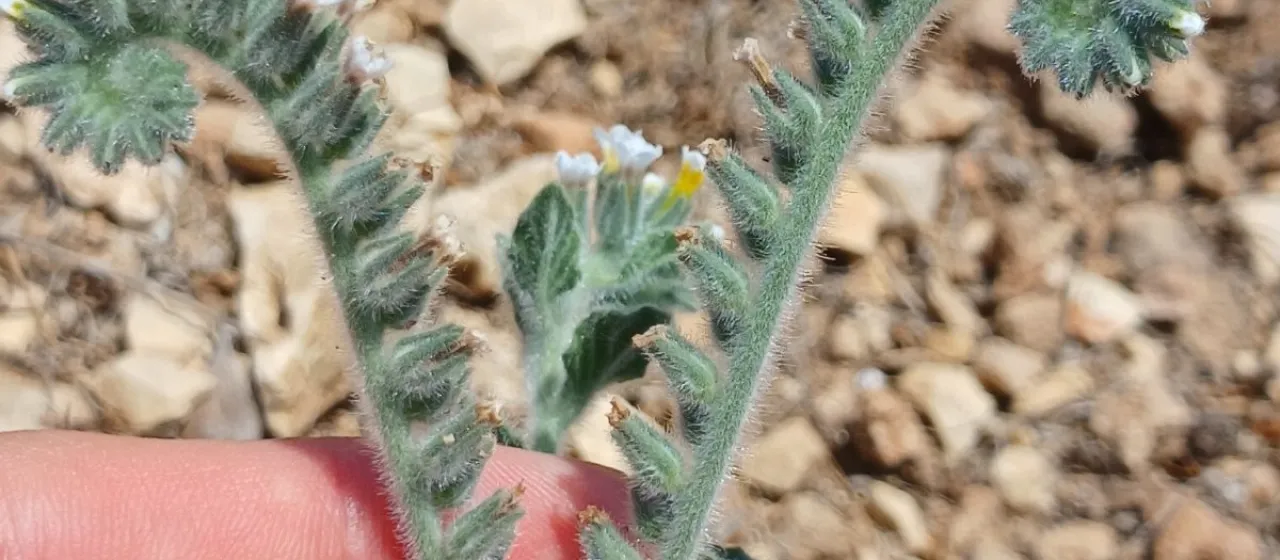
Heliotropium hirsutissimum is a perennial herbaceous plant belonging to the Boraginaceae family. Known for its distinctively dense and coarse hair covering, this species is well-adapted to harsh, arid environments. It is often categorized in agricultural studies as a problematic weed that exhibits significant resilience against climatic stress and various mechanical disturbances.
Native to arid and semi-arid regions of Western Asia and the Mediterranean, the species has a broad distribution range. It typically thrives in sandy, stony, or nutrient-poor soils where moisture availability is limited. Its biological success is attributed to its deep taproot, which allows the plant to access subsoil water reserves, making it a persistent presence in drought-prone agricultural landscapes.
The botanical structure consists of erect or ascending stems covered with trichomes, which are essential for reducing transpiration. The leaves are generally oblong and alternate, exhibiting a grayish-green color due to the heavy pubescence. The inflorescences are scorpioid cymes that uncoil as the small, dry fruitlets mature, facilitating efficient seed dispersal across the field.
Agronomically, this species requires specific management strategies due to its high tolerance for poor soil conditions and heat. Cultivation control often involves deep plowing to damage the root systems and the use of targeted herbicide applications. It does not perform well in heavily shaded or excessively wet environments, allowing for competition from vigorous, fast-growing crop species.
Key agricultural considerations include:
- Toxicity: The plant contains alkaloids that are harmful to livestock, rendering infested pastures unsafe for grazing.
- Competition: It competes heavily with crops for water, leading to yield losses in dryland farming systems.
- Control: Standard mechanical removal is often ineffective if root segments are left behind, necessitating chemical interventions.
- Pests: While generally resistant, it can host specific insect pests that may transition to neighboring crops.