
Description
Heliotropium lineare is a herbaceous plant belonging to the Boraginaceae family. Unlike many other members of this genus, this particular species is distinguished by its narrow, linear leaves, which gives it a unique ornamental appearance. It is an interesting subject for botanical research and specialized horticulture, known for its specific physiological adaptation to dry environments.
The origin of Heliotropium lineare is traced back to South America, specifically in regions such as Argentina. It is naturally adapted to arid and semi-arid climates, where it thrives in open, sunny locations. The plant has evolved to survive in environments where water availability is limited, often colonizing sandy or rocky soils in its native habitat.
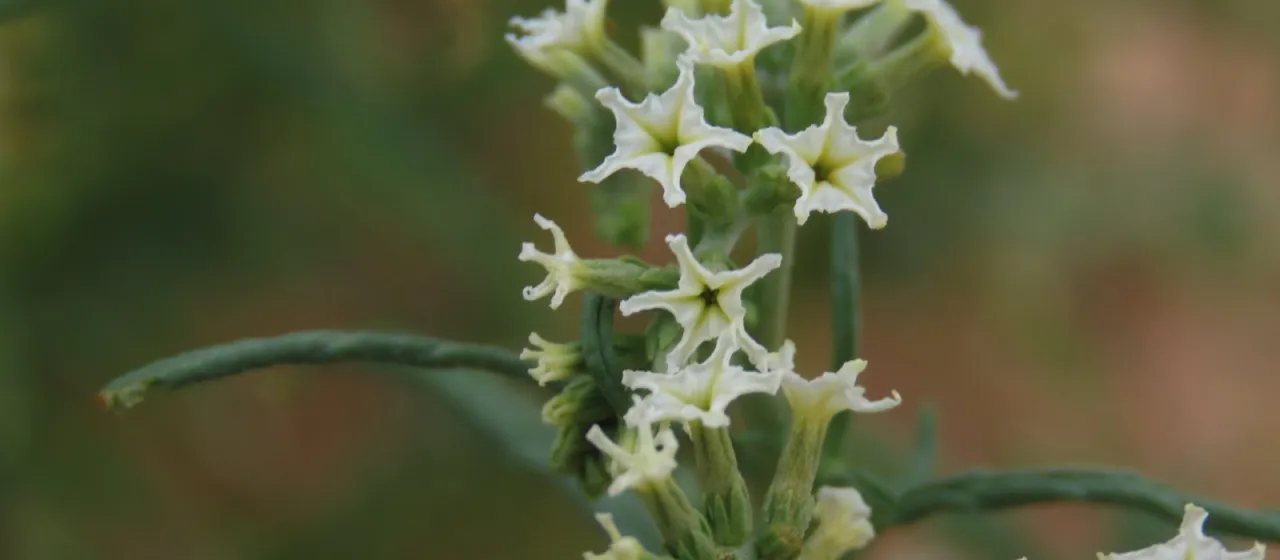
Botanically, the plant is characterized by its upright or slightly sprawling stems covered in pubescent linear foliage that helps reduce transpiration. The flowers, typical of the Boraginaceae family, are arranged in cymes and possess a subtle fragrance. The root system is relatively robust, allowing the plant to anchor itself firmly in loose soils and efficiently capture limited moisture.
Regarding agrotechnical requirements, the plant demands full sun exposure to flourish. It requires well-drained, sandy, or neutral-pH soil to prevent root rot, which is the primary risk during cultivation. Watering should be regulated to mimic natural rainfall patterns in its native range—thorough but infrequent. The plant is not frost-hardy and generally requires protection or container cultivation in regions with cold winters.
Heliotropium lineare is primarily used in landscaping, particularly in xeriscaping or rock gardens where drought-tolerant plants are preferred. Its aesthetic value lies in its texture and prolonged blooming season. Potential pests include aphids and spider mites, which can be managed with standard horticultural practices, while susceptibility to powdery mildew remains a concern in poorly ventilated or excessively humid conditions.