
Description
Heliotropium steudneri is a herbaceous plant belonging to the Boraginaceae family. It is a significant species for botanists and researchers focusing on plants adapted to the environmental stressors of arid and semi-arid regions. Its unique survival mechanisms make it a subject of interest for sustainable agricultural development in challenging climates.
The origin of this species is traced to North-East Africa, where it has evolved to flourish in harsh, dry environments. The natural habitat typically includes sandy or rocky soils, demonstrating the plant's ability to thrive where other vegetation might struggle. This geographic origin is the primary driver of its distinct morphological and physiological adaptations.
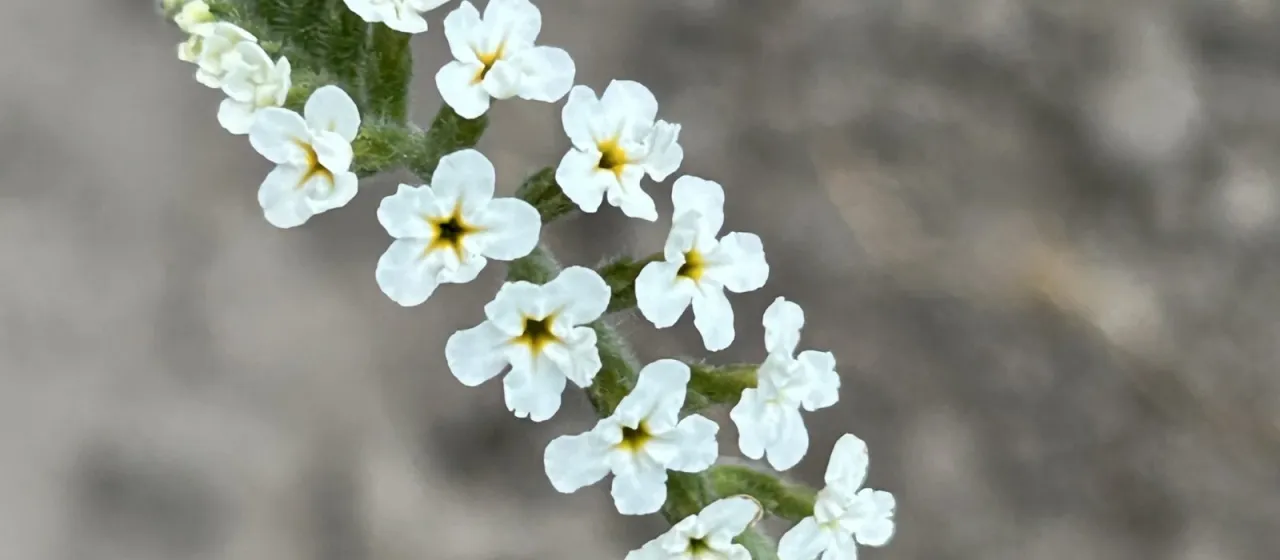
Botanically, Heliotropium steudneri features a robust root system and small, dense inflorescences. The foliage is covered in trichomes (hairs), which serve as a protective barrier against excessive water loss through transpiration. These traits are essential for maintaining the plant's metabolic balance during prolonged periods of high heat and low precipitation.
Regarding agrotechnics, the plant requires well-drained, porous soils to prevent root rot, which is a common threat in agricultural settings. Optimal growth is observed in regions with high solar radiation and low soil moisture capacity. It requires minimal irrigation, making it a potentially low-input crop that can be grown without intensive management practices.
Agricultural use of Heliotropium steudneri is currently targeted towards land reclamation and pharmacological research. Given the presence of various phytochemicals within the plant, it is being evaluated for its medicinal potential. Furthermore, its role as a hardy plant in restoration ecology is being investigated as a means to prevent soil erosion in degraded areas.
- High drought tolerance
- Adaptability to nutrient-poor soils
- Resistance to extreme thermal stress
- Potential for soil restoration