
Description
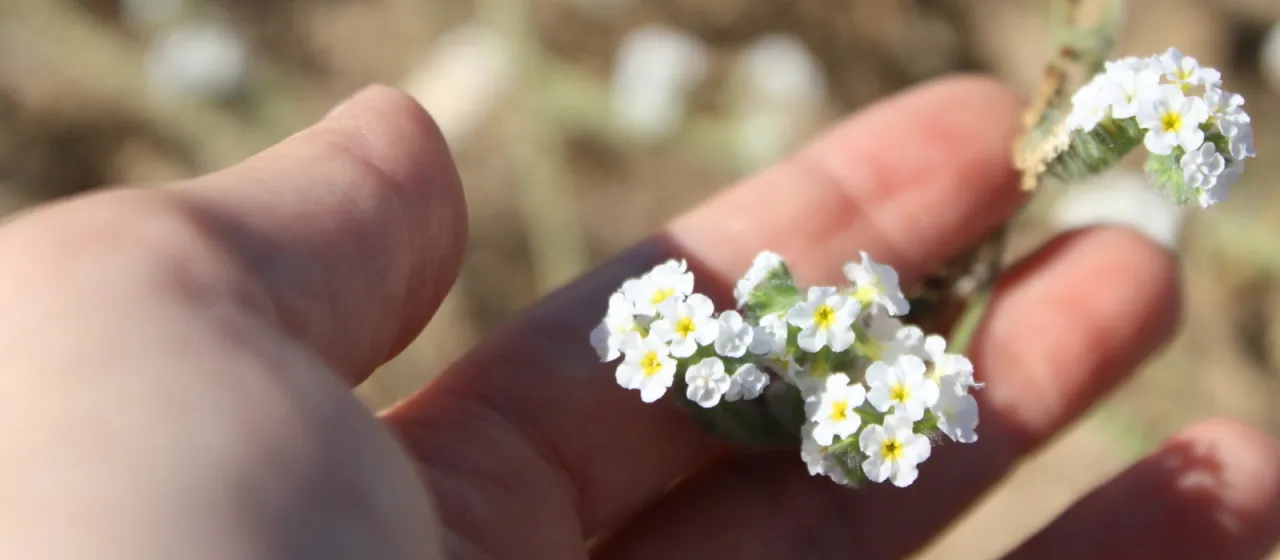
Heliotropium suaveolens is a perennial herbaceous plant belonging to the Boraginaceae family. It is widely recognized in horticulture for its intense, vanilla-like fragrance and rich, deep-colored flowers. While naturally perennial in tropical climates, it is often grown as an annual in cooler regions to ensure healthy development and continuous flowering during the summer months.
Originating from South America, the plant has become a staple in gardens worldwide due to its adaptability to various environments. The natural range of this species extends across subtropical zones, where it thrives in warm, sunny habitats. It is commonly cultivated in formal gardens, containers, and borders where its olfactory profile can be fully appreciated.
Botanically, the plant develops into a branching shrub with rugose, dark-green foliage that provides a perfect backdrop for its vibrant blooms. The flowers are arranged in dense terminal cymes, appearing from late spring through autumn. Its biological cycle is highly dependent on light intensity, which directly triggers the phototropic movement of the inflorescences throughout the day.
Cultivation requirements focus on providing a site with full sun exposure and well-draining, nutrient-rich soil. The plant is sensitive to waterlogging, so maintaining a balanced irrigation schedule is crucial. Regular feeding with balanced fertilizers is recommended during the peak growing season to support the formation of numerous flower clusters and maintain lush foliage development.
- Requires consistent moisture, but not waterlogged soil.
- Thrives in full sun for at least 6–8 hours daily.
- Benefits from pinching to encourage bushier growth.
- Sensitive to low temperatures and frost.
Heliotropium suaveolens is primarily utilized as an ornamental plant for sensory gardens and landscaping. Despite its hardiness in ideal conditions, it is susceptible to certain pests like aphids and spider mites, particularly in greenhouse settings. Management of these issues involves maintaining good air circulation and monitoring for early signs of fungal infections like powdery mildew or gray mold.