
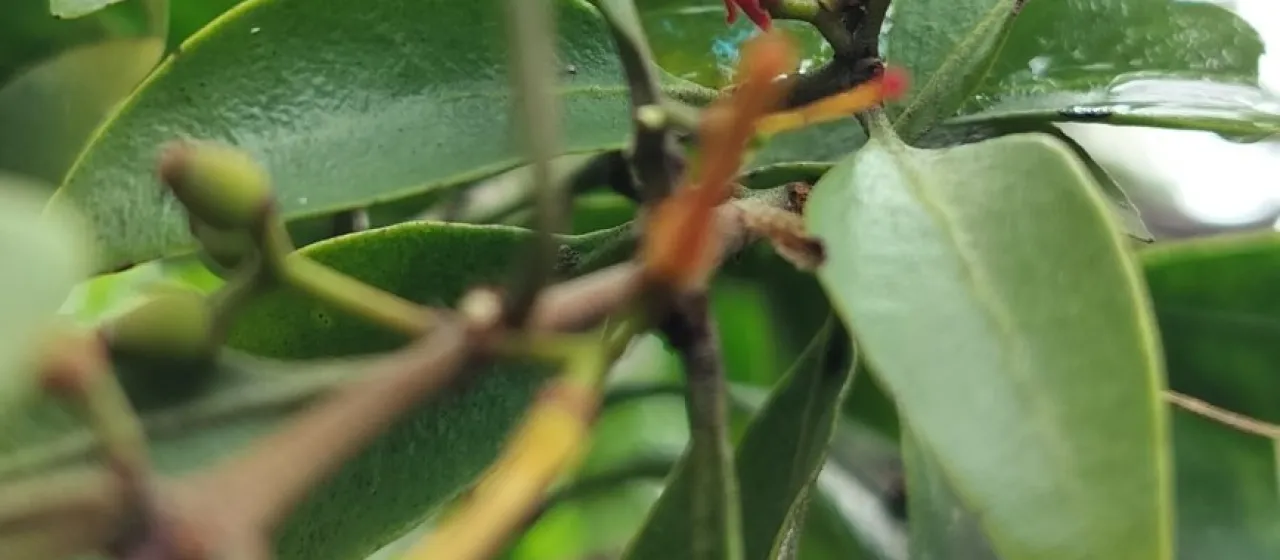
Description
Helixanthera ligustrina is a perennial evergreen plant belonging to the Loranthaceae family. Unlike conventional crops, this species is classified as an obligate hemiparasite, meaning it survives by attaching itself to the branches of host trees and extracting water and nutrients through specialized vascular connections.
The plant is native to the tropical and subtropical regions of Asia, with a primary distribution range across India and parts of Southeast Asia. It thrives in dense forest environments, where high humidity levels and consistent temperatures support its growth and the survival of its host tree populations.
Botanically, the species is distinguished by its haustoria—specialized organs that penetrate the bark and xylem of the host plant. The leaves are typically leathery and resemble those of the privet plant, hence the specific epithet ligustrina. The plant is capable of photosynthesis but relies on the host for its mineral supply.
The environmental requirements for this species are strictly tied to the biological availability of suitable host trees. It does not require conventional soil or cultivation practices, as its lifecycle is inherently linked to the survival of the arboreal hosts it parasitizes within its native ecosystem.
In terms of economic impact, Helixanthera ligustrina is generally viewed as a pest in silviculture and forestry. Severe infestations can significantly weaken host trees, leading to reduced growth rates and increased susceptibility to other pathogens. Effective management strategies involve the pruning of infected branches to prevent the spread of the parasite within tree plantations.