
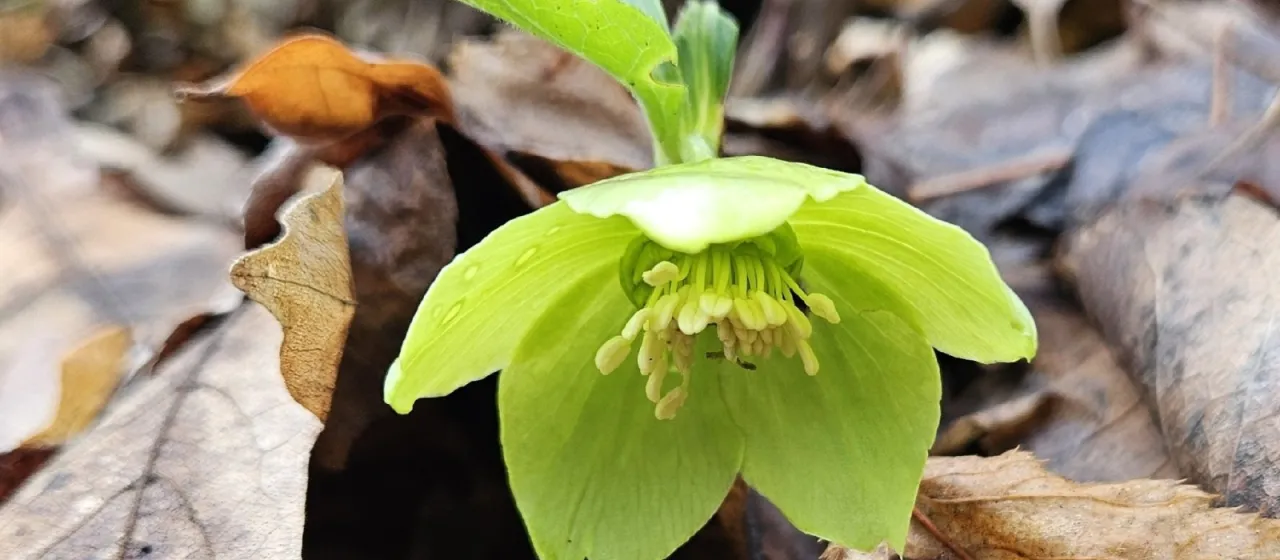
Description
The fragrant hellebore (Latin: Helleborus odorus) is a perennial herbaceous plant belonging to the Ranunculaceae family. It is a highly valued ornamental plant known for its early blooming period, which often begins in late winter or early spring, and its robust nature in various garden conditions.
The native distribution area of this species spans across the Balkan Peninsula, including countries like Hungary and parts of the former Yugoslavia. It typically grows in woodland habitats and on limestone slopes where the soil is rich in organic matter and provides sufficient drainage. This origin explains its preference for shaded environments.
Botanically, the plant is characterized by a thick, sturdy rhizome and evergreen, leathery leaves that persist through the winter. The flowers exhibit a distinct yellowish-green color and are notable for their fragrance, which is quite unique among the Helleborus genus. The plant typically reaches a mature height of 30 to 50 centimeters.
In terms of cultivation, fragrant hellebore requires fertile, well-draining soil with a neutral to slightly alkaline pH. It thrives best in partial shade, mimicking its natural woodland floor environment. Essential agricultural practices include regular mulching, moderate watering during dry spells, and the application of balanced fertilizers at the start of the growing season.
While primarily used in ornamental gardening for shaded borders and rock gardens, it is crucial to handle the plant with care as it is toxic if ingested. Maintenance tasks include removing damaged foliage in late winter to prevent fungal diseases such as leaf spot. Regular monitoring for pests like aphids is also recommended to ensure the plant's health.